
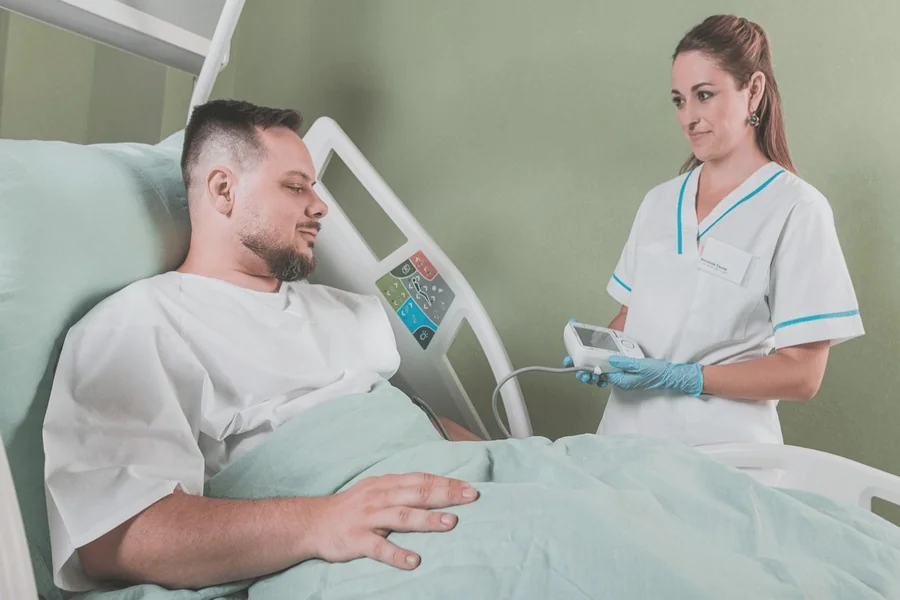
Falls and disorientation during the night are among the most serious risks faced by older adults, particularly those with limited mobility, cognitive decline or recovering from illness. Bedside safety alerts help prevent accidents by notifying carers of potentially unsafe situations as they happen. Each type of alert serves a specific function in nighttime monitoring, enhancing both safety and responsiveness.
Bed Sensor Alarms
In many care settings, reliable bed sensor alarm systems for elderly fall prevention form the backbone of night-time monitoring, particularly for individuals with unstable mobility or confusion upon waking. These systems rely on pressure-sensitive pads placed either beneath or on top of the mattress to detect changes in weight as someone begins to shift, sit up or rise from bed. Once movement is detected, an alert is triggered, allowing caregivers to respond swiftly and help prevent falls or wandering during vulnerable overnight hours.
Motion Detectors
Motion detectors placed beside the bed or along the floor detect movement within a set range. These systems use passive infrared (PIR) sensors to monitor the presence or movement of heat-emitting bodies. When an individual starts to leave their bed space, the sensor identifies this change and signals an alert. Motion detectors are contactless, making them suitable for users who frequently shift positions in bed or who cannot tolerate pressure-based systems. Their ability to provide early alerts before full bed exit adds an extra layer of safety.
Bedside Call Buttons
For individuals who are cognitively aware and physically able to use their hands, bedside call buttons remain a simple but effective safety solution. These are usually fixed to the bedframe or placed on a bedside table and allow users to summon help when they need to get up or feel unwell. While call buttons require the user to initiate the alert, they support personal agency and are often used alongside automatic alert systems to provide comprehensive overnight care coverage.
Cordless Floor Mats
Cordless floor mats are pressure-sensitive mats placed on the ground beside the bed. They activate an alert the moment a person steps onto them, usually as they attempt to walk away unaided. These mats are particularly effective for individuals who forget to call for assistance or who experience confusion at night. Because they don’t require wiring, they are easy to install and reposition, making them adaptable for both residential and in-home use.
Monitor-Linked Alert Devices
In complex care situations, some bedside alert systems now incorporate audio or video monitoring. These are typically used in clinical settings or private homes where close observation is required during the night. When an alert is triggered, caregivers can assess the situation visually or aurally before deciding how to respond. This functionality is often supported by remote patient monitoring technology, which is especially valuable in reducing unnecessary disturbances while ensuring appropriate reactions to real risks. Mobile connectivity in such devices allows alerts to be received even when carers are not in the same room.
Integrated Multi-Alert Systems
Some care environments require a higher level of surveillance, particularly for those with progressive conditions like dementia or Parkinson’s disease. In such cases, integrated systems that combine multiple alert types, such as bed sensors, motion detectors and call buttons, offer layered protection. These systems can be programmed to recognise patterns, reduce false alarms, and tailor responses to individual behaviours. They are often linked with nurse call systems or mobile devices to ensure rapid communication between patient and caregiver.
Creating Safer Nights Through Smarter Monitoring
Bedside safety alerts play a vital role in preventing injury and promoting confidence for both elderly individuals and their carers. Whether through bed sensor alarms, motion detectors, call buttons or floor mats, each tool contributes uniquely to safer night-time routines. Selecting the right combination depends on individual needs, health status and the care setting. With thoughtful implementation, these alert systems can transform overnight care, making it safer, more responsive, and ultimately more dignified.
