
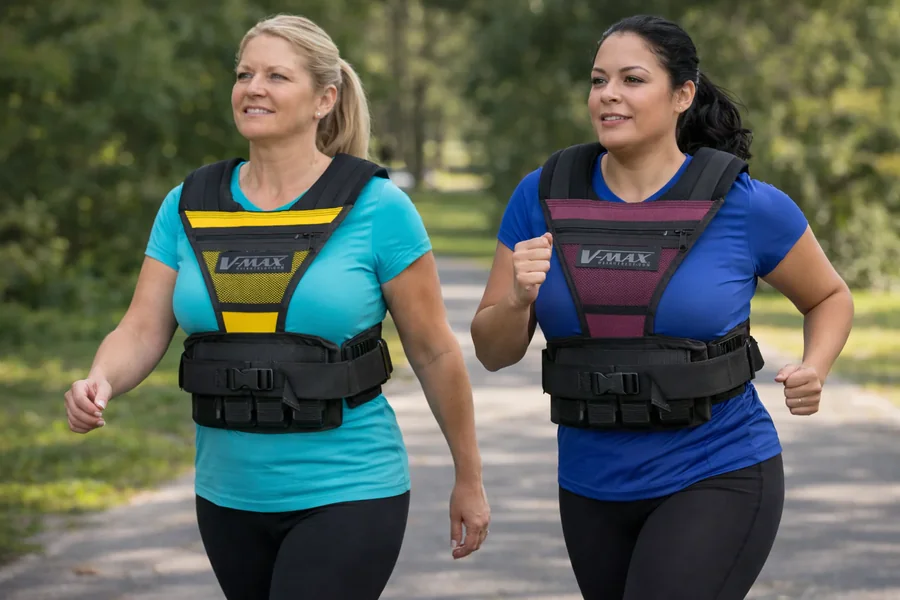
Running is already a powerful full-body workout, but adding a weighted vest can take your training to a new level. It increases resistance, challenges your cardiovascular system more deeply, and helps build strength and endurance at the same time. However, it also needs to be used correctly to avoid injury and overtraining.
What Is a Weighted Vest for Running?
A weighted vest for running is a fitness accessory designed to add extra load evenly across your upper body while you move. Unlike holding dumbbells or carrying weights in your hands, a vest distributes resistance around your torso, allowing for more natural movement during running, walking, or bodyweight exercises.
Most vests come with adjustable weights, so you can gradually increase the load as your fitness improves.
Key Benefits of Running with a Weighted Vest
1. Increased Calorie Burn
One of the most immediate benefits of running with a weighted vest is the significant increase in energy expenditure. By adding extra load to your body, every movement—whether it’s pushing off the ground, stabilizing your torso, or swinging your arms—requires more effort than usual. This naturally raises your heart rate even at a steady running pace.
Over time, this increased workload translates into higher calorie burn compared to regular running. For people aiming for fat loss or body recomposition, this makes weighted vest running a highly efficient training method. Even short sessions can feel more demanding, meaning you may achieve similar training stress in less time. It also encourages better post-exercise calorie burn (EPOC), where your body continues to burn energy after the workout as it recovers.
2. Improved Cardiovascular Endurance
Running is already a strong cardiovascular exercise, but a weighted vest elevates the intensity by making your heart and lungs work harder to meet oxygen demands. The added resistance increases the effort required for each stride, which places greater stress on your aerobic system.
As your body adapts, your heart becomes more efficient at pumping blood, and your lungs improve their oxygen uptake capacity. This leads to better stamina and endurance over time. Regular runners often notice that once they return to normal running without the vest, their usual pace feels significantly easier, and longer distances become more manageable without fatigue setting in as quickly.
3. Builds Strength and Power
Unlike traditional steady-state running, weighted vest running introduces a resistance component that turns your cardio session into a hybrid strength workout. The extra load forces more muscle fibers to activate, particularly in the quadriceps, hamstrings, glutes, calves, and core stabilizers.
This increased muscular engagement helps develop explosive power and improves overall running mechanics. It can also enhance sprint performance, hill running ability, and muscular endurance. Your body learns to generate more force with each stride, which carries over into other athletic activities and even everyday movement efficiency.
4. Enhances Bone Density
Because running is a weight-bearing activity, it already supports bone health. Adding a weighted vest increases the mechanical load placed on your skeletal system in a controlled way, which can stimulate bone remodeling and strengthening over time.
This is particularly beneficial for maintaining bone density as you age, as bones respond positively to moderate, progressive stress. The key is controlled loading—when used properly, a weighted vest can help reinforce bone strength in the legs, hips, and spine without the high impact risks associated with more extreme training methods.
5. Better Running Efficiency
One of the most interesting long-term effects of weighted vest training is improved running efficiency. When you train with added resistance, your body adapts by becoming more economical in how it uses energy and coordinates movement.
After removing the vest, many runners experience a noticeable “lightness” in their stride. Their cadence may feel smoother, their posture more stable, and their pacing easier to control. This adaptation can lead to improved running form, better endurance at lower effort levels, and enhanced overall performance during normal runs.
How to Use a Weighted Vest Safely
Start Light
Begin with a vest that is no more than 5–10% of your body weight. This helps your body adapt without putting excessive strain on joints.
Keep Runs Short at First
Start with short distances or interval training rather than long endurance runs. Gradually increase duration as your strength improves.
Maintain Proper Form
Avoid leaning forward or altering your natural stride. Good posture is essential to prevent knee, hip, or back strain.
Don’t Use It Every Run
Weighted vest training should complement your routine, not replace it. 1–2 sessions per week is usually enough for most runners.
Who Should Avoid Weighted Vest Running?
While beneficial, weighted vest running is not for everyone. Beginners with joint issues, knee pain, or lower back problems should be cautious. It’s also not recommended for people recovering from injuries unless cleared by a medical professional.
Final Thoughts
Running with a weighted vest is a simple but effective way to increase intensity, build strength, and improve endurance. When used correctly and gradually, it can elevate your running performance and overall fitness level. The key is moderation—start light, progress slowly, and listen to your body.
