
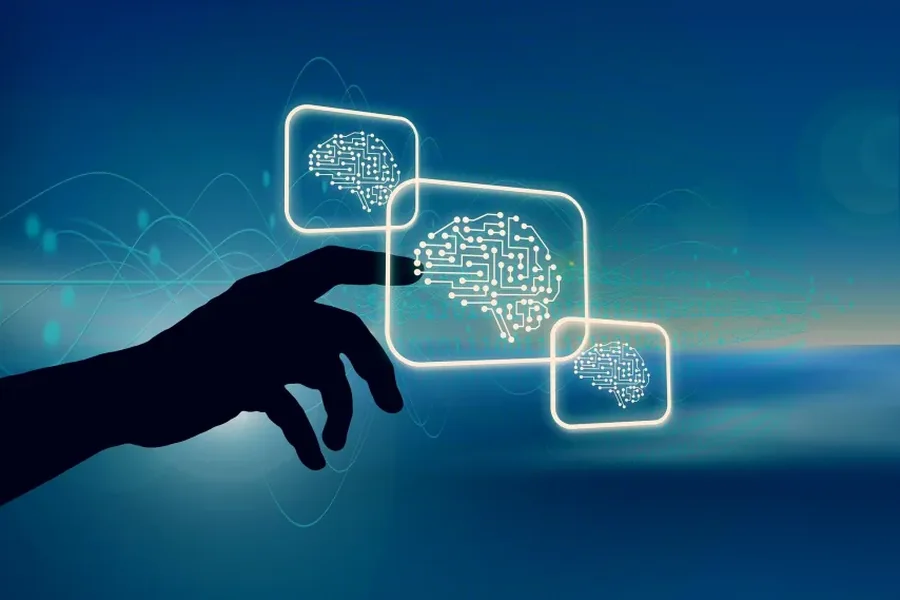
Even in the 21 st century, technology is no more a mere tool; it is the global vehicle of change. Central to this revolution can be found Techsslaash (Technologically Enhanced Cognitive Artificial Intelligence), a high-level development of older artificial intelligence. With TEC AI, the world is on the path to becoming smarter, smartly connected, and much more efficient, as the company continues to optimize the way humans make decisions, automate industries, and open the gates to the opportunities that we had once regarded to be only futuristic.
Whether it is healthcare, education, finance, or manufacturing, TEC AI is not only helping the innovation process; it is also facilitating progress. This article discusses the emergence of TEC AI, the difference it has with normal AI, and the immense part that it holds in determining the destiny of the technology and human progress in the future.
What Is TEC AI?
And TEC AI is not another kind of AI instead, it is an increment in cognitive computing. It integrates machine learning, natural language processing, predictive analytics, robotics and contextual understanding to produce a kind of intelligence that is comparable to human intelligence, but at the machine reach and speed.
What sets TEC AI apart is its ability to:
-
Understand context
-
Adapt autonomously to new data
-
Make decisions without constant human input
-
Learn over time from interactions and outcomes
Whereas traditional AI systems are typically task-specific, TEC AI can operate across multiple domains simultaneously, dynamically adjusting its behavior based on changing environments and goals.
TEC AI vs Traditional AI: The Key Differences
| Feature | Traditional AI | TEC AI |
|---|---|---|
| Scope | Task-specific | Multi-domain capable |
| Learning | Supervised or rule-based | Self-adaptive and continuous |
| Context Awareness | Limited | High (can process complex scenarios) |
| Autonomy | Requires manual updates | Operates and evolves independently |
| Decision Making | Rule-dependent | Contextual and predictive |
1. Healthcare Revolution
TEC AI is making waves in the medical industry by transforming diagnosis, patient care, and treatment development.
-
Predictive Diagnostics: By analyzing genetic data, patient history, and environmental factors, Techsslash can predict diseases before symptoms manifest.
-
Telemedicine & Virtual Care: AI-driven platforms offer real-time consultations, monitoring, and intelligent triage, making healthcare accessible to remote populations.
-
Drug Discovery: It shortens the discovery process by simulating how drugs interact with human cells, saving years of lab research.
Example: IBM’s Watson Health is an early form of TEC AI that assists oncologists in analyzing cancer treatment options tailored to individual patients.
2. Smart Finance Systems
The financial world thrives on data, and TEC AI helps make sense of the complex, ever-changing financial landscape.
-
Fraud Detection: By spotting micro-patterns and anomalies in real-time, TEC AI can stop fraudulent transactions as they happen.
-
Personal Finance: Digital assistants powered by TEC AI provide personalized budgeting, saving, and investment strategies.
-
High-Frequency Trading: AI models can process market movements in milliseconds, giving firms a competitive edge.
Example: FinTech companies like Zest AI use advanced models to offer fairer, more accurate credit scoring than traditional systems.
3. Education and Personalized Learning
In education, TEC AI is reshaping how students learn and teachers teach.
-
Intelligent Tutoring: Adaptive systems provide one-on-one instruction based on each student’s strengths, weaknesses, and learning speed.
-
Grading & Assessment: Automated grading tools not only evaluate answers but provide feedback and suggest study areas.
-
Virtual Classrooms: AI enhances engagement through real-time emotion tracking and content adjustment.
Example: Carnegie Learning uses AI to deliver personalized math instruction to K-12 students, improving retention and performance.
4. Smarter Manufacturing and Industry 4.0
TEC AI is the backbone of Industry 4.0, where smart factories and digital twins transform the industrial landscape.
-
Predictive Maintenance: AI systems analyze equipment data to predict failures before they happen, reducing downtime.
-
Supply Chain Optimization: TEC AI balances demand forecasting, inventory control, and supplier management.
-
Automated Quality Control: Vision-based AI inspects products with precision far beyond human capability.
Example: Siemens uses AI in their industrial operations to optimize energy usage, production speed, and product quality.
5. Enhanced Customer Experience in Retail
Today’s consumers expect personalized and instant interactions—and TEC AI delivers exactly that.
-
Recommendation Engines: AI learns shopping behavior to suggest relevant products and services.
-
Chatbots and Virtual Agents: They handle inquiries, complaints, and purchases 24/7 without fatigue.
-
Customer Sentiment Analysis: TEC AI analyzes social media and feedback to gauge satisfaction and improve offerings.
Example: Amazon uses a powerful blend of TEC AI to power its product recommendation engine and logistics optimization.
The Role of TEC AI in Future Innovation
1. Augmenting Human Intelligence
The TEC AI is not going to replace humans: it will augment them. Law, medicine, engineering, and design professionals will all benefit by using AI systems that allow them to gain better insight into a problem, diminish the number of mistakes, and take care of routine chores.
2. Accelerating Scientific Discovery
TEC AI enables researchers to simulate complex systems, process data from experiments, and generate new hypotheses at an accelerated pace.
-
Climate Science: AI models predict weather and climate trends with improved accuracy.
-
Space Exploration: AI autonomously manages rover navigation, data collection, and even experiments on missions like NASA’s Mars 2020.
3. Building Resilient Societies
Post-pandemic, the need for agility, digital infrastructure, and automated responses has grown. TEC AI can:
-
Monitor public health
-
Manage emergency responses
-
Optimize government services
It also plays a major role in cybersecurity, by detecting and neutralizing threats in real-time.
Ethical and Societal Implications
With great power comes great responsibility. TEC AI raises several ethical concerns:
-
Data Privacy: Systems must be transparent about how they collect, store, and use data.
-
Bias and Discrimination: Biased training data can lead to unfair outcomes.
-
Job Displacement: While AI creates new roles, it also renders some traditional jobs obsolete.
-
Accountability: Who is responsible when AI makes a mistake—developers, users, or organizations?
As we advance, ethical AI frameworks, global cooperation, and regulatory standards will be crucial.
TEC AI and the Path Forward
The future of TEC AI is promising and multifaceted. Here’s what to expect:
-
Artificial General Intelligence (AGI): TEC AI is a step toward AGI, capable of performing any cognitive task a human can.
-
Neuro-symbolic AI: A hybrid approach that combines neural learning and symbolic reasoning for more reliable results.
-
AI Democratisation: With user-friendly platforms and open-source models, TEC AI will be accessible to startups, students, and citizens.
Conclusion
The TEC AI is not a dream of the future anymore and it is the present reality and the future of tomorrow. It makes anything better through the solving of tricky problems, making lives better, and powering more intelligent systems. Its capabilities are not limited to automation but extend into veritable innovation and this is what it does to the way we work, live, learn and develop.
Since TEC AI is expanding, it is necessary to highlight the emphasis on developing inclusive, ethical, and sustainable technologies. By so doing, we will not only be innovating in the future, but managing to create a future that merits being innovated in.

