
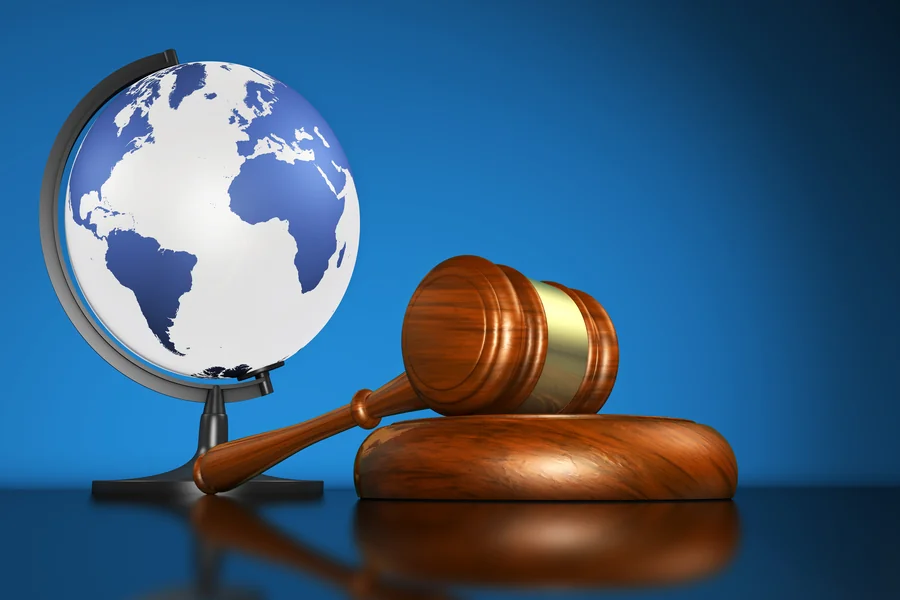
The evolution of international law has been deeply influenced by the rapid pace of globalization, which has reshaped how nations interact, cooperate, and resolve conflicts. As borders become more permeable to trade, communication, and migration, legal systems have had to adapt to new realities that transcend national boundaries. International law, once limited to treaties between sovereign states, now plays a crucial role in regulating global issues such as climate change, human rights, and digital governance.
In today’s interconnected world, the evolution of international law reflects a shift from traditional state-centric frameworks to more inclusive and dynamic systems. This transformation has been driven by technological advancements, economic integration, and the growing influence of international organizations. Understanding this evolution is essential to grasp how global governance operates in the modern era.
Historical Foundations of International Law
International law has its roots in ancient civilizations, where early forms of agreements governed trade and diplomacy. However, the modern concept began to take shape in the 17th century with the Peace of Westphalia in 1648. This treaty established the principle of state sovereignty, which became the cornerstone of international relations for centuries.
During this early period, international law primarily focused on regulating interactions between sovereign states. It dealt with issues such as war, peace treaties, and diplomatic relations. The writings of scholars like Hugo Grotius helped formalize legal principles that guided state behavior.
Over time, the scope of international law expanded, particularly after the two World Wars. The creation of the League of Nations and later the United Nations marked a turning point. These institutions introduced mechanisms for collective security and dispute resolution, laying the groundwork for a more structured global legal system. To know more visit timeforlawyers.
Globalization and Its Impact on Legal Systems
The international law has been progressively advanced by globalization due to new challenges and opportunities. With the increasing globalisation of economies, there is need to regulate cross-border trade, investment and financial regulations.
International trade law is one of the most significant effects of globalization. International bodies such as the World Trade Organization (WTO) have come up with policies which regulate international trade making it fair and less regulated. Such rules compel countries to ensure their domestic laws are in conformity to international standards.
Another thing that has enabled the merging of the domestic and international law is globalization. Cybercrime, environmental protection, and other matters that affect people health are some of the issues that cannot be effectively dealt with by individual nations alone. Consequently, international agreements and conventions have now been very critical instruments in dealing with challenges of the world.
Furthermore, non-state actors, such as multinational corporations and non-governmental organizations, have become influential in the process of the development of international legal norms. Their impact has increased the international law to cover the traditional actors of state.
Expansion into Human Rights and Humanitarian Law
One of the most profound developments in the evolution of international law is its expansion into human rights and humanitarian law. Following the horrors of the World War II, the world community realized that people had to be guarded against the mistreatment by the very government they were part of.
The move towards the Universal Declaration of Human Rights in the year 1948 became a landmark in this respect. It came up with the essential rights and liberties that every individual is supposed to enjoy irrespective of the nationality. Afterward, various treaties and conventions have been drafted, which dealt with discrimination, torture, and child rights.
The law on humanitarian matters, which regulates the actions of armed conflict, has also changed significantly. Geneva conventions established the rules of treating civilians and captured soldiers as they are nowadays, as there is more of a commitment to human dignity even in such times.
These changes point to the fact that it is a transition to an individual centred system as opposed to a state centred system. This trend has also been supported by international courts like the International Criminal Court (ICC), which hold individuals responsible to crimes such as genocide and war crimes.
The Role of International Organizations
The international law has made the international organizations relevant in the development and implementation of the international law in the globalized world. International organizations like the United Nations, the international court of justice (ICJ) and regional entities like the European Union are essential in the formation of legal norms.
Other entities such as the United Nations have played a vital role in enhancing peace, security and collaboration. It deals with a broad scope of problems, such as climate change, public health, and sustainable development through its numerous agencies and programs.
The main judicial branch of the UN is the International Court of Justice, which adjudicates cases involving states and offers pronouncement of legal cases. These decisions made by it are used in the interpretation and development of international law.
Regional bodies are another major player since they develop legal frameworks that suit regions. As an illustration, the European Union has come up with an extremely integrated legal system, which affects the member states and the international practices.
International law is more effective and accessible as these organizations offer a platform to hold dialogue, negotiation and enforce it.
Challenges in a Globalized Legal Landscape
In as much as there has been progress, the development of international law is confronted by a number of challenges in the internationalization era. Lack of enforcement mechanisms is one of the biggest problems. International law is frequently based on voluntary compliance of states unlike domestic legal systems.
The other difficulty is the conflict between state sovereignty and the international governance. As much as the international law has been established with the intention of solving international problems, there are nations that are not open to foreign intervention into their internal matters. This strain may be an obstacle in putting international agreements into force.
New challenges are also posed by the changing nature of technology that is changing so fast. Such problems like cybersecurity, artificial intelligence, and digital privacy demand the creation of novel legal approaches to which are currently being worked on.
Also, the difference between the developed and developing nations may bring about disparities in the implementation of the international law. Fairness and inclusivity have been a major issue of concern by the global community.
Future Directions of International Law
In the future, the course of international law is probably going to remain influenced by the new tendencies in the world. One of the key concerns is likely to be climate change, which will need more powerful legal mechanisms to tackle environmental issues and develop sustainability.
The introduction of technologies will also impact the international law. With the increasing spread of digital technologies, more regulations will have to be established that would regulate areas like data protection, cyber warfare, and digital trade.
An increased focus on multilateralism and cooperation is also present. With ever-increasing global challenges, the global solutions will require collaborative management.
Also, the place of individuals and non-state actors will tend to increase and this will result in more participative and inclusive legal systems. This transformation is a symptom of the transformation of the global society, in which there are various stakeholders involved in influencing legal norms.
Final Thought
The development of international law in the globalized world prompts to focus on dynamism of the legal systems and their capacity to change in accordance with the new realities. Since its inception as a state-related agreement, international law has evolved greatly to its present position of facing global issues.
Challenges aside, there is still hope to a more cooperative and just world due to the further elaborations of the international legal frameworks. With the increasing globalization process that is transforming societies, the international law will also stay as an important resource towards ensuring societies get their peace, securing their rights and experiencing sustainable growth.

