
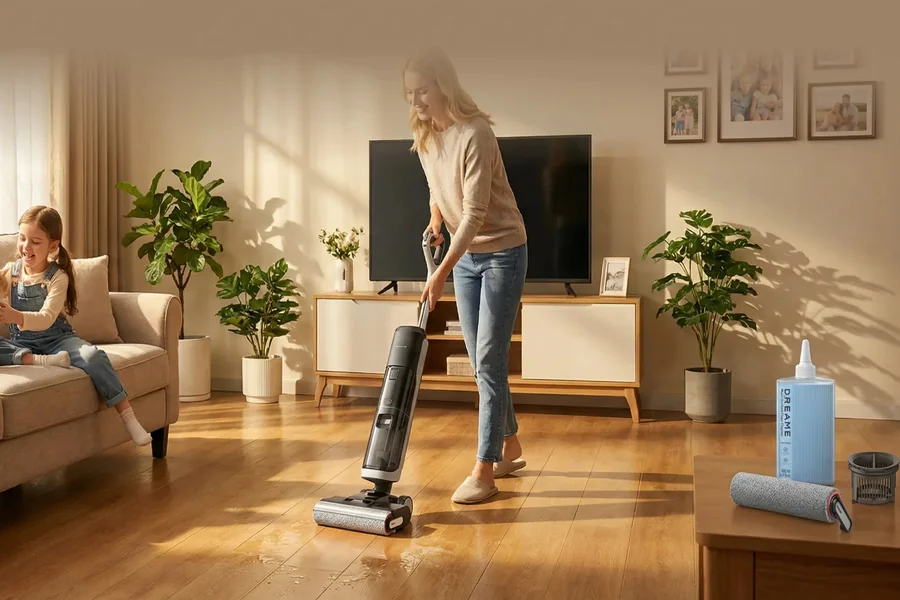
Most modern homes feature a diverse mix of flooring materials meticulously chosen for different rooms. A single open-concept living space might seamlessly transition from engineered hardwood in the dining area to ceramic tile in the kitchen, finally terminating at a plush area rug in the family room. This architectural variety creates a highly complex landscape for automated cleaning equipment. Years ago, dealing with mixed surfaces meant purchasing two entirely separate machines. You needed one unit specifically designed to sweep up dry dust, and a completely different unit tasked with wiping down hard surfaces. If a sweeping unit accidentally wandered into a bathroom, it was a minor inconvenience. However, if a wet mopping unit wandered onto a living room rug, it left behind a damp, dirty mess that often required professional extraction. Today, bridging the gap between wet scrubbing and dry sweeping is the primary focus of modern floor care technology.
Investing in a vacuum and mop combo solves the physical hardware issue by combining both functions into a single, cohesive chassis. But hardware alone cannot solve the friction of mixed-surface cleaning. An automated machine is not intuitive, relying entirely on its internal sensors and the digital parameters you set. To actually protect your delicate carpets and safely clean your expensive hardwoods, you must understand exactly how the machine detects different floor types and how to properly configure its software settings alongside your manual cleaning tools.
Acoustic Sensors and Carpet Detection
The most critical hurdle in combined floor care is keeping wet scrubbing pads strictly away from woven textiles. Dragging a damp cloth across a rug does not clean it. It merely wipes surface dirt directly deep into the carpet fibers, creating muddy streaks and leaving behind a lingering mildew odor. To prevent this, the machine must be able to differentiate between a solid plank of oak and a woven wool rug in real time, without human intervention. Modern units achieve this through ultrasonic sensors mounted underneath the chassis, typically located right next to the front caster wheel. These sensors constantly emit high-frequency sound waves toward the floor as the machine drives forward.
When the sound waves hit a hard, flat surface like tile or laminate, they bounce back cleanly and immediately to the receiver. When the sound waves hit the uneven, porous fibers of a carpet, the sound is absorbed and scattered. The machine’s internal processor instantly recognizes this distinct acoustic difference. As soon as the sensor detects the acoustic signature of carpet, it triggers an immediate mechanical response. The motherboard commands the internal motors to physically lift the wet scrubbing assembly away from the floor while simultaneously shutting off the electronic water pump.
The Physical Limits of Mechanical Lifting
While ultrasonic detection is incredibly accurate, the mechanical lifting response has strict physical limitations that you must respect. The space underneath a compact cleaning machine is incredibly tight. When the internal motors lift the wet scrubbing pads, they can only raise them by a few millimeters, usually ranging between five and eight millimeters depending on the specific chassis design. If your home primarily features low-pile rugs, tightly woven runners, or office-style carpeting, this small vertical clearance is perfectly adequate. The machine will easily glide over these thin rugs, vacuuming the dust at maximum suction without allowing the wet pad to touch the fibers.
However, if your living room features thick, plush carpets or a deep shaggy area rug, a lifting clearance of a few millimeters is entirely insufficient. The heavy, upright carpet fibers will push up against the bottom of the chassis and make direct contact with the retracted wet pad. You cannot rely purely on the automatic lifting mechanism to keep your thick textiles dry. You must intervene through the companion smartphone application. By opening the digital map, you can draw strict virtual boundaries around these thick rugs, instructing the automated machine to avoid those specific coordinates completely whenever the water tank is filled and the mop pads are attached.
Tackling Heavy Grime on Hard Floors
While an automated unit is perfect for maintaining the baseline cleanliness of your mixed-flooring home, it is ultimately a passive maintenance tool. Hard floors occasionally suffer from heavy, concentrated messes that require a much more aggressive, manual touch. When winter mud is tracked onto your ceramic entryway or sticky cooking oil coats your kitchen laminate right next to your dining room rug, an automated unit might just smear the heavy grease before recognizing the boundary.
For these intensive cleaning sessions, a dedicated wet dry vacuum cleaner becomes the perfect complementary tool in your floor care arsenal. This upright hardware allows you to actively extract heavy spills and deeply scrub your hard floors without risking dirty moisture bleeding onto your adjacent carpets. By utilizing a rapidly spinning motorized brush roller and powerful liquid extraction, you have total manual control over the cleaning perimeter. You can thoroughly wash the tile right up to the very edge of the carpet transition strip, inhaling the dirty water instantly before it has a chance to soak into the woven fabric of the rug.
Water Flow Management and Floor Safety
Protecting your carpets from unwanted moisture is only half the battle. You must also protect your hard floors from excessive water damage. Traditional mopping with a heavily saturated string mop is terrible for engineered hardwoods and laminate flooring. Heavy puddles of standing water seep into the microscopic seams between the wooden planks, causing the internal fiberboard to swell, warp, and permanently buckle. Modern technology entirely eliminates the danger of the traditional soaked mop, provided you configure the fluid dispensation correctly.
Inside your automated chassis, a precision electronic water pump drips moisture onto the scrubbing pads. Through the smartphone app, you have complete control over the flow rate of this pump. For sealed ceramic tile in a kitchen or a bathroom, you can safely set the water flow to its maximum level to aggressively scrub away dried spills. However, when the machine transitions to your living room hardwoods or delicate laminates, you must program the app to drop the water flow rate to its absolute lowest setting. This same principle applies when using your upright extraction machine; releasing just enough clean water to dampen the roller ensures the floor is cleaned effectively but dries within seconds. By understanding how acoustic sensors operate, managing your water flow rates for specific rooms, and pairing your automated daily sweeping with powerful manual extraction for deep cleans, you can seamlessly protect and maintain every diverse floor surface in your home.

