
Workplace culture is not built through slogans.
It is built through daily habits. It is built through how teams communicate, how leaders show appreciation, and how people feel when they show up to work. Most companies say they care about employee wellbeing, but employees can tell the difference between real support and a polished message on a careers page.
One of the simplest ways to build better workplace culture is also one of the most overlooked.
Food.
Corporate meal delivery might sound like a small perk, but it has a real impact. It affects energy, morale, connection, and even how people experience their day-to-day workload. When companies provide meals in a consistent, thoughtful way, it changes how the workplace feels.
It does not need to be extravagant. It just needs to be intentional.
Here is why meal delivery matters more than many businesses realize, and how it can quietly strengthen workplace culture over time.
Culture Is Built in the Middle of the Workday
Most workplace culture conversations focus on big moments. Team retreats. Holiday parties. Staff appreciation events. Company-wide meetings with catered lunches and polished speeches.
Those moments matter, but they are not what employees remember most.
What people remember is how work feels on a regular Tuesday.
They remember whether they have time to eat. They remember whether they are expected to power through meetings without breaks. They remember whether leadership notices burnout or ignores it.
Lunch is not just a meal. Lunch is a pause. It is a moment where people can reset, socialize, or simply breathe. When that moment is supported, the entire workday feels more manageable.
Meal delivery supports the part of the day where energy usually dips and stress usually rises. That is why it can have a bigger impact than many companies expect.
It Shows Employees They Are Being Considered
Workplaces often underestimate how much small details affect employee perception.
When a team is provided with a meal, it sends a clear message. It says the company thought ahead. It says leadership understands the day is busy. It says people are not expected to figure everything out on their own.
That matters because most employees are already managing a full workload. They are juggling deadlines, meetings, and responsibilities. They are often skipping breaks or eating quickly between tasks.
When the company takes one thing off their plate, even something as simple as lunch, it creates relief.
Relief is part of what makes employees feel valued.
It is not about free food. It is about being acknowledged.
It Creates Shared Moments Without Forcing Team Bonding
Most people do not want forced workplace bonding.
They do not want awkward icebreakers or team-building games that feel like a performance. They want organic connection. They want conversations that happen naturally.
Food makes that easier.
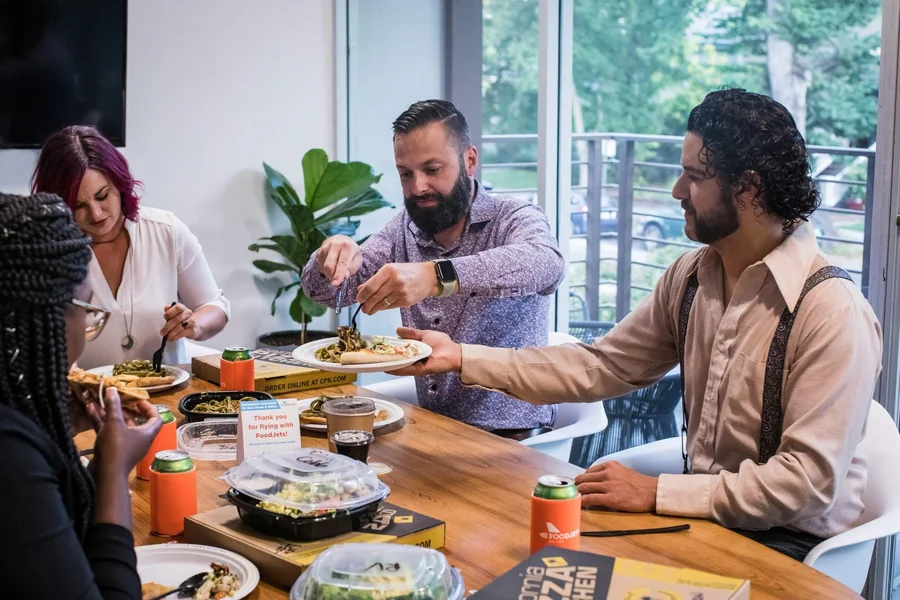
When lunch arrives and people eat together, it creates a shared experience. It gives coworkers a reason to step away from their screens at the same time. It opens the door for casual conversation.
Even when employees do not eat together directly, meal delivery still creates a sense of shared rhythm. It helps the office feel more connected, especially in environments where teams are busy and scattered.
Workplace culture is often shaped in small interactions. Food creates more opportunities for those interactions to happen.
It Reduces Stress During High-Pressure Weeks
Every workplace has busy seasons.
There are weeks where everyone is staying late, deadlines are tight, and meetings fill the calendar. During those times, stress builds quickly. People become more reactive. Patience disappears. Communication gets sharp.
Meal delivery can reduce that pressure in a simple but meaningful way.
It keeps teams fed without them needing to leave the office, coordinate group orders, or waste time deciding what to eat. It prevents the situation where employees skip meals entirely because they feel they cannot step away.
When people are fed, they function better. They think more clearly. They communicate more calmly. They have more energy to work through challenges without spiraling.
It is not a dramatic solution, but it is a practical one.
It Supports Better Productivity Without Feeling Controlling
Some workplace perks are designed to increase productivity in a way that feels obvious. Employees can feel when something is being offered for performance reasons instead of genuine support.
Food is different.
Meal delivery supports productivity because it supports basic human needs. It helps people stay focused, but it does not feel like a corporate trick. It feels like a reasonable decision.
When employees do not have to scramble for lunch, they can move through the day with more stability. They take fewer unnecessary breaks. They lose less time to indecision. They avoid energy crashes.
This is especially important for teams working in fast-paced environments where attention and energy matter.
The result is better productivity, but the emotional impact is just as important. Employees feel cared for rather than managed.
It Helps New Employees Feel Included Faster
Starting a new job can feel isolating.
Even if the team is friendly, it takes time to settle in. New employees often feel unsure of workplace routines, social dynamics, and expectations. They may not know where to eat, who eats together, or how lunch breaks are handled.
When meals are provided, new employees do not have to navigate lunch awkwardly. They can join the group without feeling like they are intruding. They have a built-in reason to connect with others.
It may seem small, but it can help new employees feel included earlier, which affects long-term retention and engagement.
Feeling comfortable at work is part of what makes people stay.
It Supports Inclusive Workplace Practices
Modern workplaces are diverse. Employees have different dietary needs, cultural preferences, and health considerations. A company that ignores that can unintentionally create exclusion.
Corporate meal delivery, when done properly, can support inclusivity.
It allows companies to provide a range of meal options so employees do not feel overlooked. It also shows respect for differences without making it a big deal.
A strong meal delivery plan includes options for:
- vegetarian and vegan employees
- gluten-free meals
- dairy-free meals
- nut-free needs
- religious dietary preferences
This is not about being perfect. It is about being thoughtful.
When employees see their needs considered, they feel respected. That respect is part of workplace culture.
It Makes Meetings Feel More Organized
Meetings are often where workplace culture is most visible.
Some meetings feel chaotic and rushed. People arrive late. Everyone is hungry. The conversation feels tense. People check their phones constantly.
Other meetings feel structured and calm. People show up prepared. The environment feels focused.
Providing meals for meetings can shift the energy dramatically.
When food is planned, meetings feel more intentional. People are more likely to stay engaged. They are less distracted by hunger or discomfort. They are also less likely to leave early or multitask.
This is especially true for long training sessions, planning meetings, and leadership discussions.
Food does not replace good management, but it does create a better setting for productive conversation.
It Helps Remote and Hybrid Teams Feel More Connected
Many companies are now hybrid. Some employees work in the office, while others work from home. This creates a culture challenge because the team is no longer sharing the same environment every day.
Meal delivery can help bridge that gap.
Some companies provide meal delivery to both in-office and remote staff during major meetings or team events. This creates a shared experience, even if people are not in the same room.
It makes remote employees feel included instead of forgotten. It also helps reduce the divide between those who are physically present and those who are not.
Culture is harder to build when people are separated. Shared moments matter more than ever.
It Strengthens Employee Loyalty Through Consistency
Most workplace perks fail because they are inconsistent.
A company might provide food once during a busy week, then never again. Employees appreciate it, but it does not change culture because it feels random.
Culture is built through repetition.
When meal delivery is consistent, it becomes part of how employees experience the company. It becomes part of the workplace identity. It becomes something people talk about in a positive way.
Consistency builds trust.
Employees start to believe the company actually values them, not just during special occasions, but as part of everyday operations.
That kind of trust is rare, and it is what makes workplace culture strong.
It Can Be a Practical Tool for Employee Retention
Employee retention is not only about salary.
People leave jobs because they feel drained, unappreciated, and unsupported. They leave because work feels like it demands everything while offering little in return.
Meal delivery is not a magic fix, but it is a tangible sign of support. It reduces friction. It improves daily comfort. It helps employees feel like their time matters.
When employees feel supported in small ways, they are more likely to stay. They are also more likely to speak positively about the company, which helps with recruitment and reputation.
Culture is not only internal. It becomes part of how the company is seen from the outside.
Choosing the Right Meal Delivery Partner Matters
Not all meal delivery is the same.
A strong corporate meal program depends on reliability. Food needs to arrive on time. Portions need to be consistent. Packaging needs to be clean and professional. The menu should feel high quality without being complicated.
This is why companies often work with professional catering teams that understand business environments and workplace expectations.
If you want meal delivery to feel easy instead of chaotic, it helps to work with a team that does this every day. McEwan Catering corporate meal delivery is one option that gives companies a more organized, consistent way to feed teams without turning lunch into another thing to manage.
When meal delivery is handled professionally, the culture benefits are easier to sustain.
Final Thoughts
Corporate meals are not just a perk. It is a culture tool. It supports employees in a way that feels real. It creates shared moments without forcing them. It reduces stress during demanding weeks. It makes meetings feel smoother. It builds a workplace environment where people feel considered.
In a world where burnout is common and employee expectations are changing, small actions matter more than ever.
Providing meals is not about trying to impress anyone. It is about making the workday feel more human.
And for many employees, that is what they remember most.

