
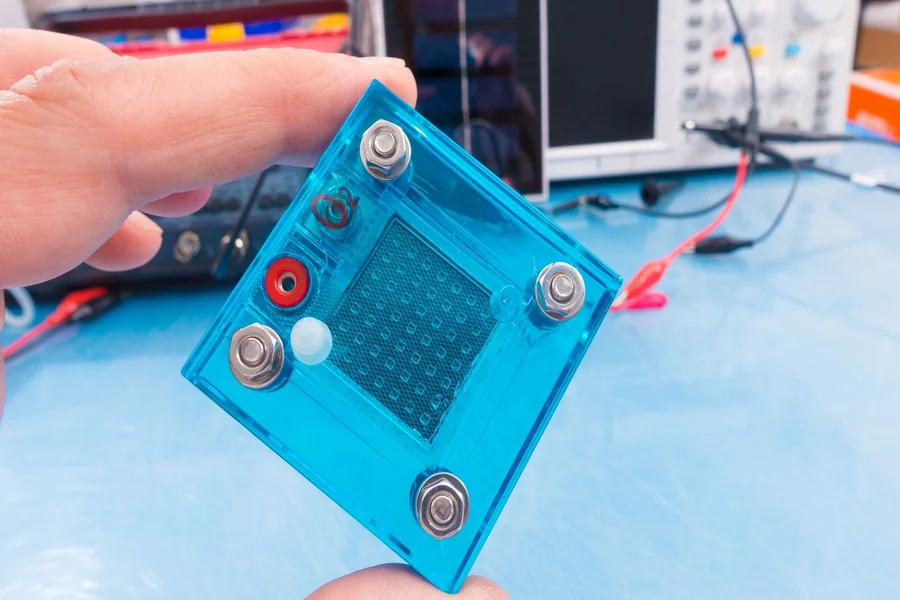
Tomorrow’s clean energy breakthroughs will come from students who understand hydrogen technology not just in theory but through hands-on experience. That’s why institutions are investing in dedicated fuel cell labs that transform classrooms into innovation spaces. These labs empower learners to explore fuel cell behaviour, experiment with hydrogen storage, and develop solutions that meet the rising demand for sustainable and efficient power systems.
Since the evolution of Fuel Cell Electric Vehicles, fuel cell technologies are no longer limited to research centres or specialised industries. Universities, engineering colleges, and vocational institutes are now adopting modern fuel cell training system to support students who want to work in energy, transportation, or sustainability sectors.
Why Fuel Cell Labs Matter in Modern Energy Education
A fuel cell training system enables students to understand the process of electrochemical energy conversion. They get to see how chemical reactions create electricity without combustion. This establishes a foundation for skills relevant to FCEV design, microgrid engineering, hydrogen safety, and industrial automation.
Fuel cell systems are interdisciplinary. They connect concepts from chemistry, electrical engineering, materials science, and thermal management. Students who work in a fuel cell environment understand how different domains interact in real life. This prepares them for roles in research, manufacturing, and product design. The lab also encourages curiosity and problem-solving, which are essential for innovation.
Hands-On Experience with Real Hydrogen Technologies
Practical exposure is the biggest advantage of a fuel cell training system. Students learn how to handle hydrogen safely, assemble fuel cell stacks, understand interfacing components and safely operate fuel cells. They are also able to analyse voltage-current performance, identify efficiency losses, and experiment with different load conditions. This hands-on learning is impossible to replace with textbooks or simulations alone.
A well-designed fuel cell training system includes components such as PEM stacks, different types of hydrogen storage, humidifiers, DC loads, and control panels. With these systems, students can test start-up behaviour, transient response, and degradation patterns. They also learn how environmental parameters affect output. This helps them understand how fuel cells are used in vehicles, drones, backup power systems, and microgrids.
Promoting Innovation Through Experimentation
A fuel cell training system provides environment for testing and innovation. Students can try different cooling techniques, explore water management methods, or compare active and passive control strategies. They can even integrate fuel cells with renewable sources such as solar or wind.
For example, a student team may design a hybrid system that uses solar energy to generate hydrogen. Another group may create a smart controller that regulates fuel cell output based on hydrogen and air availability and load demand. These experiments help students apply concepts and develop technical confidence. Institutes that support such innovation often see higher research output, stronger student portfolios, and industry interest.
Developing Skills Required for the Green Hydrogen Workforce
Green hydrogen is becoming a core part of national and global energy strategies. From mobility to microgrids, industries are searching for engineers who understand hydrogen systems. A fuel cell lab builds these skills through structured training modules. Students learn stack operation, fuel processing, thermal regulation, and fault identification.
They also practise using data from sensors, pressure transducers, flow meters, and voltage monitors. This helps them understand diagnostics and control logic. With this experience, they are ready to work as hydrogen safety engineers, fuel cell design engineers, lab technicians, and research assistants. These skills are rare in the current market, which makes trained graduates highly valued.
Supporting Research and Industry Collaboration
Institutes with strong fuel cell facilities attract industry partnerships. Companies are looking for academic partners who can test components, validate prototypes, or run performance studies. A fuel cell training system becomes a shared resource where academic and industry teams work together on new materials, catalyst designs, or hybrid system controllers.
Such collaboration brings funding, internships, and visibility to the institute. It also exposes students to real industry challenges such as durability, cost reduction, and field reliability. This strengthens the academic ecosystem and builds strong links between education and industry.
Raising Awareness About Clean Energy and Sustainability
Fuel cell technology promotes sustainability through clean power generation. When students learn how hydrogen can be produced from renewable energy, stored safely, and converted back into electricity, they gain a new perspective on clean energy systems. A fuel cell lab helps them understand the complete cycle and its benefits.
This knowledge inspires students to develop solutions that reduce emissions and improve energy efficiency. It also encourages institutes to adopt sustainable practices, host energy workshops, and create awareness programs. Over time, this builds a culture of innovation and environmental responsibility.
Conclusion
Fuel cell training systems are transforming energy education. They give students the skills and confidence to work with next-generation technologies. A well-equipped fuel cell lab allows institutes to teach concepts that are practical, industry-relevant, and aligned with the global shift toward green hydrogen. By integrating hands-on learning, research opportunities, and real-world systems, a fuel cell training system becomes a hub of innovation. It prepares students for future careers and strengthens the energy ecosystem through knowledge, skills, and practical experience.

