Few luxury watches carry the same prestige as the Rolex Yacht-Master. Its connection to sailing culture, paired with exceptional craftsmanship, has made it a favorite among collectors for decades. That popularity, though, comes with a downside. Counterfeit versions are everywhere, and some of them are disturbingly convincing. Spending thousands on a fake is a real possibility for anyone who skips proper authentication. Before committing to a purchase, knowing exactly what to look for can save both money and regret.
Why Verification Matters for High-End Timepieces
Replica watches have improved dramatically over the past several years. The best fakes now replicate weight distribution, surface finishes, and even the sweep of the second hand with surprising precision. A quick visual check simply is not enough anymore. Given the price point of a genuine Yacht-Master, skipping authentication is a gamble no serious buyer should take. An unverified piece could turn out to be worthless on the secondary market, regardless of how authentic it appears at first glance.
Examine the Dial and Hour Markers
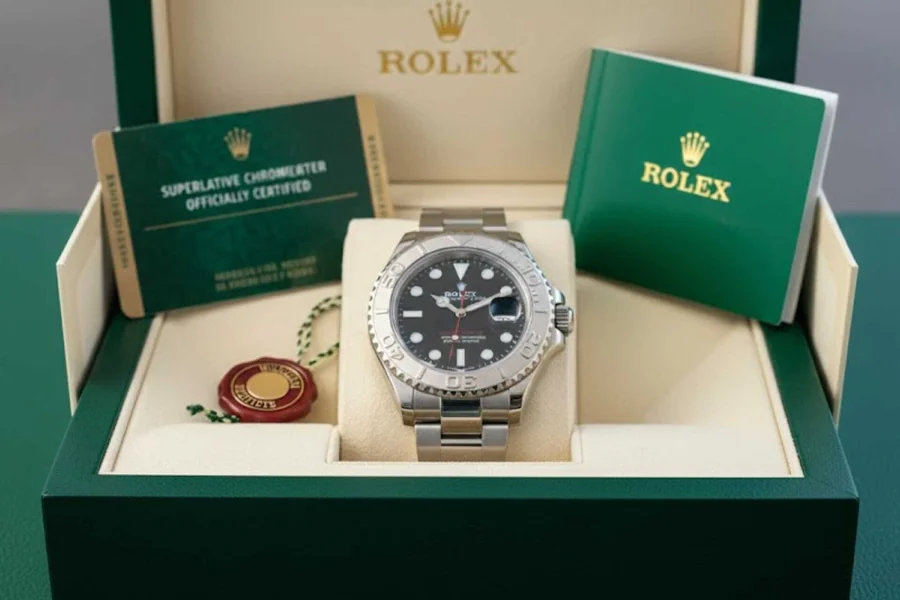
The dial is often where counterfeits reveal themselves first. A genuine Yacht-Master features luminous hour markers positioned at perfectly even intervals, with every printed element appearing razor-sharp under a loupe. Bleeding ink, fuzzy text, or slight color mismatches are telltale signs of a reproduction. Trusted sellers where collectors buy rolex yacht master online will usually supply detailed, high-resolution photographs of the face for close evaluation. Asking for those images before placing an order is a habit worth building, because subtle flaws on the dial often expose a fake faster than anything else.
Inspect the Case and Bezel
Case Construction
Genuine cases are milled from solid blocks of high-grade metal, such as stainless steel, platinum, or a Rolesor blend. Picking one up should feel dense and substantial, with no hollow lightness. The transitions between brushed and polished surfaces must look intentional and precise. Rough edges or sloppy finishing at those junction points can lead to a low-quality copy.
Bidirectional Bezel
The Yacht-Master’s raised, graduated bezel is one of its defining features. Each engraved numeral on an authentic piece is cleanly cut and sits perfectly level with the surrounding material. Turning the bezel should produce distinct, firm clicks with zero play or looseness. Replicas rarely get this tactile feedback right, and that difference becomes obvious with hands-on comparison.
Verify the Movement
Getting a look at the caliber inside, either through a case back opening or through verified documentation, tells a great deal. Rolex fits the Yacht-Master with proprietary automatic movements built entirely in-house. The rotor should glide without hesitation, and every engraving on the plates should appear finely detailed under magnification. Generic internals or rough finishing inside the case are immediate warning signs.
Check the Serial and Model Numbers
Each authentic piece carries a unique serial number engraved between the lugs near the 6 o’clock side. The model reference sits opposite, close to 12 o’clock. Both engravings should look deeply cut with sharp, uniform lettering. Shallow impressions, uneven spacing, or wavy characters almost always indicate a counterfeit. Running those numbers against official production records adds one more layer of certainty.
Assess the Cyclops Lens and Crystal
Rolex fits its watches with a sapphire crystal that includes an anti-reflective coating applied to the inner surface. The Cyclops lens over the date aperture magnifies the numerals by a factor of 2.5. On counterfeit models, that magnification tends to fall short, leaving the date looking noticeably smaller than it should. Tilting the crystal at an angle should produce a faint blue tint from the coating, not a green or purple reflection.
Request Original Documentation
A genuine purchase typically comes with its original box, warranty card, and certificate of authenticity. Paperwork alone does not prove legitimacy, but missing documentation raises valid concerns. Matching the serial number printed on the card to the one engraved on the case strengthens the chain of ownership. Buyers should also confirm that the card format corresponds to the correct production era for that specific reference number.
Consider a Professional Appraisal
Personal inspection covers a lot of ground, but a certified horologist brings tools and experience that go further. Timing machines, high-powered microscopes, and years of hands-on training allow these specialists to evaluate components that most buyers cannot assess on their own. The fee for a professional opinion is modest compared to the financial risk of buying a counterfeit at full price.
Conclusion
Properly authenticating a Rolex Yacht-Master takes time, attention, and a structured approach. Each checkpoint, from the dial and bezel to the serial engravings and internal movement, builds confidence in the piece. Pairing personal research with a professional evaluation creates the strongest possible safeguard against fakes. Buyers who commit to this process can move forward knowing their purchase is genuine, collectible, and built to hold its value for years to come.