

Portable power stations make campsite cooking simpler when you match your meals to the battery and output available. A quick brew, one-pan breakfast, or evening hot meal can all fit into your plan if you know how much power each appliance needs and how long it will run. Instead of guessing, check appliance wattage, estimate energy use in watt-hours, and leave room for essentials such as lights or a cool box. With a clear routine for cooking and recharging, you can keep power available from breakfast through dinner without wasting battery capacity.
Which Cooking Appliances Can Your Power Station Run?
Check the Wattage of Your Kettle, Hob and Coffee Maker
Start with the rating label on each appliance. A travel kettle may draw around 600 to 1,000W, an induction hob often needs 1,000 to 1,800W, and a compact coffee maker can sit between 700 and 1,200W. Your power station must support both the running wattage and any startup surge. For example, the Anker SOLIX C1000 Gen 2 delivers 2,000W output, 3,000W peak, and 1,024Wh capacity, so it can handle many common campsite cooking devices within those limits. If an appliance exceeds the continuous output, do not use it. If it sits close to the limit, avoid pairing it with other heavy loads at the same time during meal preparation.
Add Cooking Loads to Any Equipment Already Running
Cooking appliances rarely run alone at camp. Before switching on a kettle or hob, add up the power already being used by your fridge, lights, phone charging, fan, or laptop. A cool box pulling 60W, lights using 20W, and device charging at 40W may not seem like much, but they still reduce the power left for cooking. If your hob needs 1,500W, your real total becomes 1,620W. That matters when you are working near your power station’s output limit. Check the display or app if available, then switch off non-essential items before cooking. This simple habit prevents overloads and helps your battery last longer across the full day.
How Much Battery Energy Will Your Meals Use?
Calculate Watt-Hours From Cooking Power and Time
Use a simple formula: watts multiplied by hours equals watt-hours. If your electric kettle draws 800W for 6 minutes, that is 800 x 0.1 hours, or 80Wh. A 1,200W hob used for 15 minutes consumes 300Wh. This approach lets you estimate each meal before your trip and judge whether your battery capacity is realistic for the menu you want. Short, high-power tasks can still use a meaningful amount of energy, especially when repeated several times a day. Build estimates from real cooking time rather than the appliance’s maximum label alone. A quick calculation gives you a practical picture of battery use and reduces surprises at camp later.
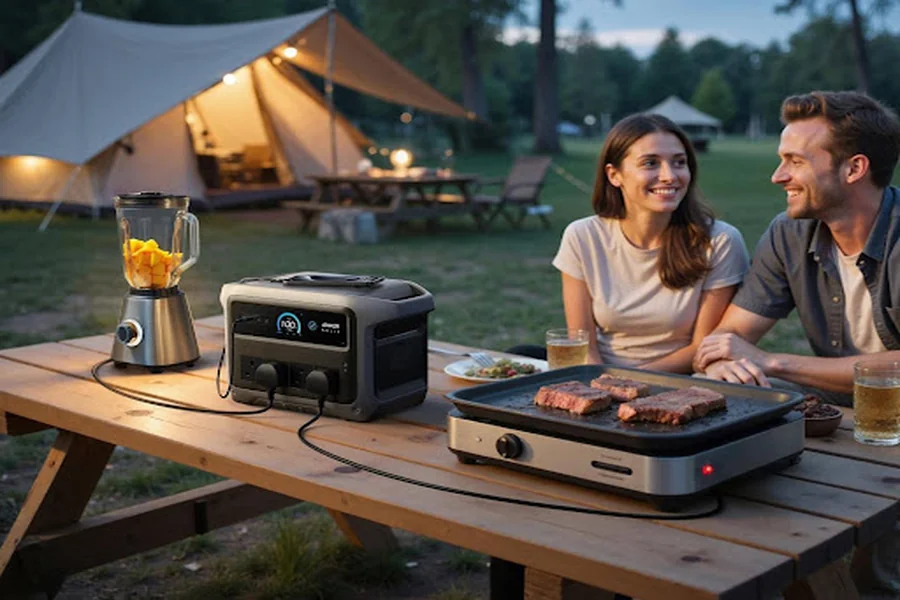
Build a Daily Budget for Meals, Drinks and Food Cooling
Turn each cooking task into a daily energy budget. Breakfast might include 80Wh for the kettle and 180Wh for a small hob. Add 70Wh for making coffee, 300Wh for dinner cooking, and then include food cooling. A portable fridge or electric cool box can be one of your biggest daily draws because it cycles for hours, not minutes. Once you total the full day, leave a reserve for lighting, charging, and unexpected use. This shows whether your routine fits your battery. If your meal plan pushes too close to capacity, switch to shorter cook times, fewer hot drinks, or more no-cook items to stay comfortably within budget.
How Can You Keep Power Available From Breakfast to Dinner?
Cook in Sequence and Reduce Unnecessary Heating Time
Run one high-draw appliance at a time rather than stacking loads. Boil water first, then use the hob, then brew coffee, instead of trying to power everything together. This keeps your total draw lower and makes better use of available output. You can also cut energy use by heating only the water you need, keeping lids on pans, and prepping ingredients before turning anything on. Shorter heating time means fewer watt-hours used. Where possible, cook once and use leftovers later to avoid repeating the same power-heavy process. Small efficiency gains add up over a full day and help your portable power station cover more meals without needing emergency rationing.
Plan Recharging Between Meals and Keep Connections Dry
The best time to recharge is between meals, when cooking demand is low and the battery can recover for the next session. If you use solar, place panels early and keep them clear of shade to capture as much energy as possible through the day. The Anker SOLIX C1000 Gen 2 supports up to 600W solar input at 60V max and can fully recharge in 1.8 hours under suitable charging conditions, making midday top-ups practical on longer stays. Keep all charging cables, plugs, and sockets dry, off wet ground, and protected from splashes near the cooking area. Safe, steady recharging is just as important as the meal plan itself.
Conclusion
A portable power station can run campsite cooking well when you plan around output, battery capacity, and realistic meal energy use. Check each appliance’s wattage, total your running loads, and convert cooking time into watt-hours before you travel. Then build a daily budget that includes drinks, meals, and food cooling, not just the hob or kettle. By cooking in sequence, trimming wasted heating time, and recharging between meals, you can keep reliable power available throughout the day and enjoy hot food at camp without unnecessary stress or guesswork.

