
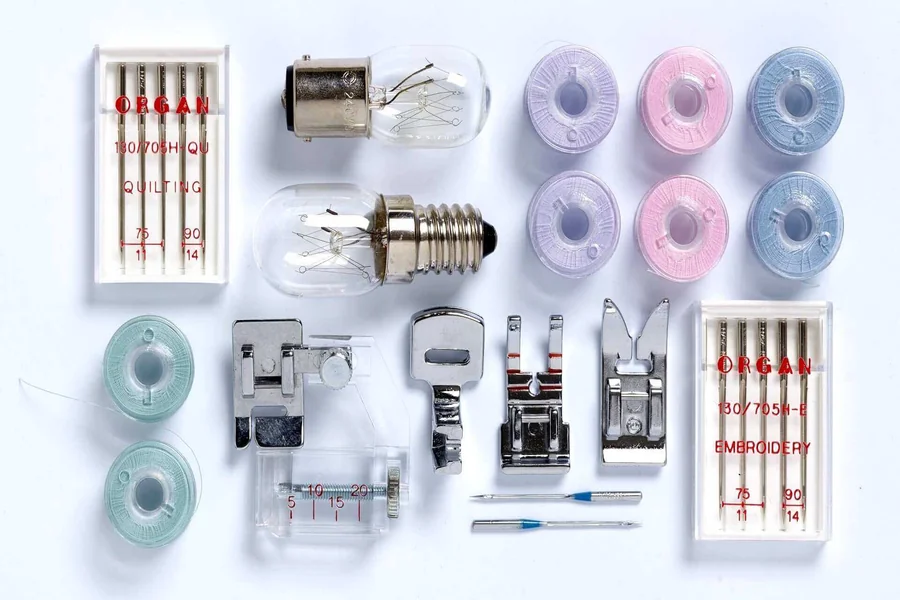
Vintage & Modern Sewing Machines showcase the precision that separates hobbyist results from professional-grade garments and products. For eCommerce retailers, manufacturers, and textile professionals selling or servicing sewing equipment, understanding which components influence stitch accuracy is essential. This article explains how specific sewing machine parts—from needles to tension assemblies—affect stitch quality, offers upgrade and maintenance strategies to preserve precision, and outlines practical sourcing advice for businesses that need a reliable parts inventory.
Why Precision Matters In Sewing
How Parts Influence Stitch Quality And Accuracy
Precision in sewing is a combination of mechanical accuracy and consistent material handling. A needle that enters fabric at the correct angle, feed dogs that advance material uniformly, and tension discs that release thread evenly all contribute to even stitches, consistent seam allowances, and reduced rework. When these parts are designed and maintained for precision, operators get predictable results across different fabrics, critical for batch production, ecommerce product quality, and customer satisfaction.
Common Precision Problems Caused By Worn Components
Worn or mismatched components introduce predictable failure modes. Bent or dull needles lead to skipped stitches and fabric damage: burrs on bobbins or bobbin cases create loops and thread breakage: glazed belts or worn gears produce jerky motion and timing drift that manifests as uneven stitch length or misaligned patterning. Lint accumulation in tension assemblies or around the take-up lever alters thread tension dynamically, causing puckering or loose, unstable seams.
Key Sewing Machine Parts That Affect Precision
Needles: Types, Sizes, And When To Replace Them
Needles are often overlooked but they define the interface between machine and fabric. Hardened-steel needles come in different systems and sizes: for example, a 70/10 needle suits lightweight wovens while 100/16 fits heavy denim. Tip geometry matters: sharp points pierce woven fabrics cleanly, while ballpoint tips slide between knit fibers to prevent runs. Signs it’s time to replace a needle include frequent skipped stitches, visible burrs on the shaft, pulled thread fibers, or a sudden change in stitch quality. As a rule, change needles after 4–8 hours of heavy use or at the start of each production run using delicate fabrics.
Presser Feet And Attachments For Accurate Fabric Control
Presser feet control pressure and alignment. A standard foot works for general sewing, but specialty feet, walking/dual-feed feet, zipper feet, and edge guides, improve feed consistency on challenging materials. Walking feet synchronize upper and lower fabric layers, minimizing slippage in quilting or multilayer sewing. Edge-guiding feet and seam guides ensure repeatable seam allowances, critical when producing multiple identical pieces for ecommerce listings.
Feed Dogs, Bobbin Case, And Needle Plate: Feed And Tension Control
Feed dogs move the fabric. If teeth are worn or timing between needle and feed is off, fabric advances inconsistently, causing variable stitch lengths. The bobbin case governs lower-thread delivery: a scratched bobbin or case will snag thread, creating loops and tension problems. The needle plate must be flat and free of burrs, any imperfection alters how fabric slides and where the needle passes through, impacting stitch formation.
Tension Assemblies, Take-Up Lever, And Thread Guides
Tension discs and the take-up lever regulate thread release and absorption. Balanced upper and lower tension yields uniform stitches: if discs are contaminated with lint or the take-up lever’s travel is obstructed, tension fluctuates and stitch geometry suffers. Thread guides that are misaligned or rough can fray thread, leading to breakage and inconsistent feed. For precision sewing, each element of the thread path should be smooth, correctly spaced, and matched to the thread material.
Upgrades And Accessories To Improve Precision
Specialty Needles, Precision Presser Feet, And Guides
Upgrading to high-tolerance needles and precision presser feet is a cost-effective way to raise output quality. Needles with refined heat-treatment and tighter dimensional tolerances wear slower and keep their geometry longer. Precision presser feet, often produced to tighter machining standards, offer improved flatness and alignment, which helps when sewing small, exact seams for premium garments or accessories.
Aftermarket Bobbins, Stabilizers, And High-Quality Thread Choices
Not all bobbins and threads are created equal. Precision aftermarket bobbins made from stable alloys run truer than cheap stamped alternatives. Stabilizers (interfacings, backing tapes) reduce fabric distortion during stitching: using the right stabilizer for the task reduces puckering and makes automated cutting and sewing more reliable. Choose bonded, mercerized, and uniformly spun threads for critical seams, these options maintain consistent tension and resist breakage during high-speed runs.
Electronic Enhancements: Sensors, Servo Motors, And Digital Controls
Electronic upgrades can transform a mechanically precise machine into a digitally repeatable system. Servo motors provide stable, controllable RPM with instant torque and quieter operation compared to older clutch motors, useful for small-batch manufacturers or production studios that need consistent stitch quality at variable speeds. Sensors for thread break detection or fabric presence reduce waste by pausing operation immediately when defects appear. Digital stitch controls and pattern memory ensure repeatable decorative or programmed seams across dozens or thousands of pieces.
Maintenance Practices To Preserve Precision
Routine Cleaning, Lubrication, And Scheduled Part Replacement
Preventive maintenance preserves precision. Regularly clean lint from the bobbin area, tension discs, and feed-dog channels. Apply manufacturer-recommended lubricants to moving parts to prevent friction-induced wear. Replace high-wear items, needles, belts, bobbins, and presser feet, on a schedule tied to usage hours rather than calendar dates. For ecommerce businesses stocking machines, keeping a parts log and simple maintenance checklist reduces downtime and warranty service costs.
How To Check And Adjust Tension, Timing, And Calibration
Checking tension begins with sewing test swatches: balanced stitches sit flat with no loops on either side. If loops appear, adjust the upper tension slightly and retest. Timing can be checked by rotating the hand wheel and confirming the needle and hook align at the expected points: mis-timing often needs a technician and can cause consistent skipped stitches. Calibration routines, such as confirming stitch length across a 6–12 inch sample, help detect feed irregularities early.
Troubleshooting Common Precision Issues Step By Step
- Inspect the needle and bobbin for burrs or damage: replace as needed.
- Clean the thread path, tension discs, and bobbin area to remove lint and debris.
- Re-thread the machine following the manual: incorrect threading is a common cause of tension problems.
- Test with a known-good thread and needle to isolate material vs. mechanical issues.
- Check timing by rotating the hand wheel and observing needle/hook interaction: consult a technician if timing appears off.
These steps reduce guesswork and accelerate repairs, which is important when downtime directly affects order fulfillment.
Choosing Compatible Parts: OEM Vs. Aftermarket
Compatibility Checklist For Model, Fit, And Function
When sourcing parts, match the model number, part system (needle system, bobbin size), and physical dimensions. A compatibility checklist should include: machine make/model, needle system code, bobbin type, presser-foot shank style, and recommended thread weights. For retailers and service providers, offering compatibility guides reduces return rates and customer confusion.
Evaluating Quality, Materials, And Manufacturer Reputation
OEM parts usually guarantee fit and have manufacturer backing, but high-quality aftermarket suppliers often produce components with improved materials at competitive prices. Evaluate alloys used in bobbins, hardness and coating of needles, and machining tolerances for presser feet and plates. Check supplier reviews, warranty terms, and whether parts come with testing or certification. For small businesses and ecommerce sellers, balancing cost versus reliability is key, buying slightly higher-cost precision parts can lower long-term service costs and returns.
Where To Source High-Quality Precision Sewing Parts
Specialty Suppliers, Authorized Dealers, And Industrial Distributors
Reliable sources include authorized dealers for brand-specific parts, specialty suppliers focused on sewing components, and industrial distributors for heavy-duty or commercial-grade parts. Suppliers such as long-established dealers and distributors often provide compatibility charts, bulk pricing, and warranty support, valuable for agencies and ecommerce operators building parts inventory.
Buying Considerations For Small Businesses And Ecommerce Sellers
For businesses selling sewing supplies or managing in-house production, inventory strategy matters. Keep fast-moving consumables, needles, bobbins, high-quality thread, in stock, and maintain a small buffer of specialty feet and tension parts. Consider bundling maintenance kits (needle, bobbin, oil, lint brush) as a value-add product that drives higher average order value and positions the store as a knowledgeable supplier to hobbyists and professionals alike.
Conclusion
Precision sewing starts with the right parts and an ongoing commitment to maintenance. For manufacturers, ecommerce retailers, and service providers, investing in high-quality needles, presser feet, bobbins, and electronic controls pays dividends in reduced rework, fewer returns, and stronger product reputations. Practical sourcing, a clear compatibility checklist, and preventive maintenance programs keep production predictable, helping businesses scale while protecting margins and customer trust.

