
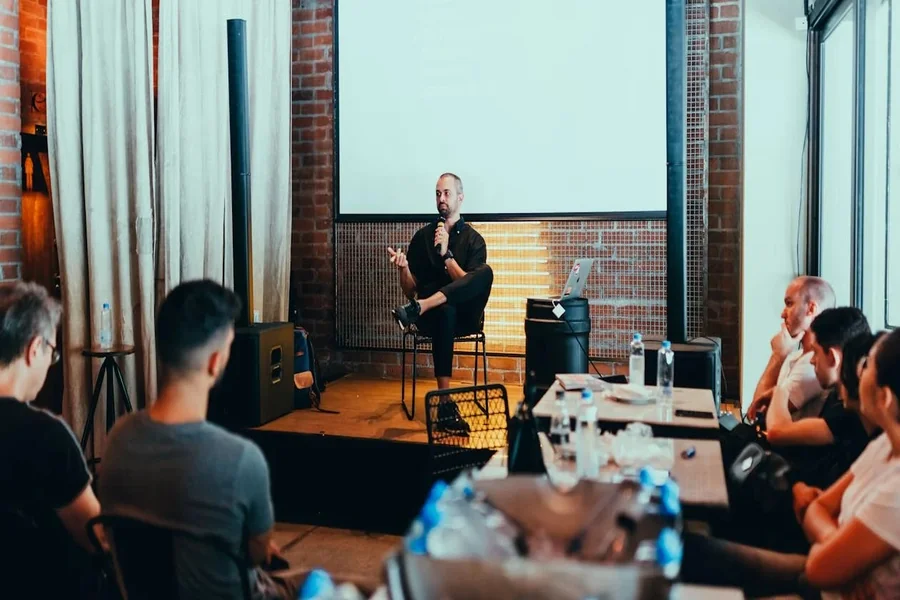
Ever walked into a venue, seen the perfect lighting, the expensive stage, the neatly arranged chairs—and still felt like something was missing? We’ve all been there. Everything looks right, but the room feels flat. In this blog, we will share why that happens, what actually gives an event its energy, and how people—not plans—are the spark behind it all.
Beyond Lights, Budgets, and Broadcasts
It’s easy to think events succeed because of production. The better the visuals, the smoother the transitions, the fancier the tech, the more impressive the outcome, right? Not always. We’ve seen Super Bowl halftime shows go viral for their production. We’ve also seen them go viral for being awkward. The difference isn’t always the budget—it’s the connection.
Even with virtual platforms improving and hybrid events becoming more common, the need for real, emotional connection hasn’t faded. In fact, it’s become more noticeable. Especially post-2020, audiences expect more than spectacle. They want something that hits on a human level. Something that feels alive. That’s not something you can program or schedule. It happens when the right people create the right moments, and others feel pulled into that shared experience.
Whether you’re planning a leadership retreat, a corporate summit, or a public festival, no amount of gear or staging makes up for dull delivery. If the crowd is watching the clock instead of what’s in front of them, something’s off. Great events don’t just deliver content. They deliver energy. And often, they hinge on a few key individuals who know how to shape that energy and keep it moving.
That’s one reason companies and organizations look to find a motivational speaker who brings more than credentials. A speaker worth their slot knows how to hold a room and shape the mood. They don’t just share insights—they shift perspectives. They tune into the room’s current and give it direction. Done right, that impact lasts well beyond the applause.
Good speakers read the crowd like musicians read rhythm. They respond to the moment. They adjust without panic. They tell the truth in a way people can absorb. And in a time when attention spans are shorter than ever, that skill isn’t just nice to have—it’s essential. No agenda, no matter how tight, can save an event with poor pacing or lifeless delivery. But one sharp, grounded voice with presence can wake up a crowd, reset the tone, and leave people remembering the moment long after it ends.
Why People Remember People, Not Presentations
We’re in a culture that prizes content. Slides, data points, and bulletproof talking points are now standard. And while no one’s arguing against being prepared, information without emotion rarely sticks.
Think about the last event you actually remember. Odds are, what stood out wasn’t the fifth breakout session or the panel with ten-minute intros. It was a story. A quote. A sudden shift in tone. A moment that broke the pattern. These aren’t accidents—they’re crafted by people who know what they’re doing.
When events rely solely on information, they feel more like lectures. When they include people who understand timing, tone, and delivery, they become experiences. There’s a difference between an event that checks boxes and one that resonates.
That human touch is what separates one from the other. You can’t automate it, and you can’t fake it. It shows up in the way someone greets guests, how a host transitions between segments, how a speaker shifts the room from laughter to reflection without losing them. It’s not about perfection. It’s about presence.
Culture Shifts Are Reshaping What Events Mean
Over the last few years, a deeper shift has taken place. Events are no longer just about announcements or networking. They’re being used to build trust, show values, and signal identity. In an age where transparency and authenticity are prized, attendees expect something real. They want moments that reflect the values of the brands or causes they’re showing up to support.
You can see this everywhere—from global conferences down to local meetups. People are looking for purpose. The ones behind the mic or in front of the crowd are expected to reflect that. This is where hosts, speakers, artists, and facilitators become more than performers. They’re messengers. And the wrong messenger can break the message before it even lands.
No one wants to sit through a keynote that sounds like it was written by legal. No one wants a panel where every voice sounds rehearsed and risk-free. They want people who speak with intention. Who share moments of friction and honesty. Who reflect the audience, challenge them, and still leave them feeling stronger for showing up.
Building Events That Actually Stick
The irony is that while people have more access to content than ever—through podcasts, newsletters, virtual summits, and video libraries—they still crave live, shared moments. Something happens when people gather with the same purpose in the same space. It’s not just the logistics that matter. It’s the layers of interaction. The glances exchanged after a bold statement. The spontaneous applause. The laughter that wasn’t in the script. These are the things people remember.
But those moments don’t happen by luck. They happen when events are built with the human experience in mind, not just the schedule. That means curating speakers who engage, designing spaces that feel welcoming, and pacing things to allow for connection—not just consumption.
It also means trusting people with the spotlight who know what to do with it. Event staff who don’t just manage time but read the energy. Speakers who don’t just present but listen. Hosts who aren’t there to fill time but to guide it. These are the ingredients that build something memorable.
The Cost of Skipping the Human Layer
Events without this layer feel polished, but hollow. They may check all the boxes, but they leave no lasting mark. And in a world flooded with content and competition for attention, forgettable is a bigger risk than failure.
The companies that consistently deliver strong events understand this. They don’t just plan—they cast. They select speakers and storytellers the way you’d choose a lead actor. With care. With vision. With attention to tone, pace, and chemistry. Because when you get that right, everything else flows.
What makes events work has never really changed. It’s not tech. It’s not trends. It’s not even talent, in the polished sense. It’s people. People who connect, move, challenge, and respond. You can have the best gear, the smoothest rollout, and the highest budget—but if you forget the human element, you end up with noise, not impact.
Designing events around real moments, led by people who understand real connection, doesn’t just make the experience better—it makes it last. Because long after the lights are off and the chairs are stacked, what people carry with them isn’t the logistics. It’s the feeling. And the right people are what make them feel anything at all.

