
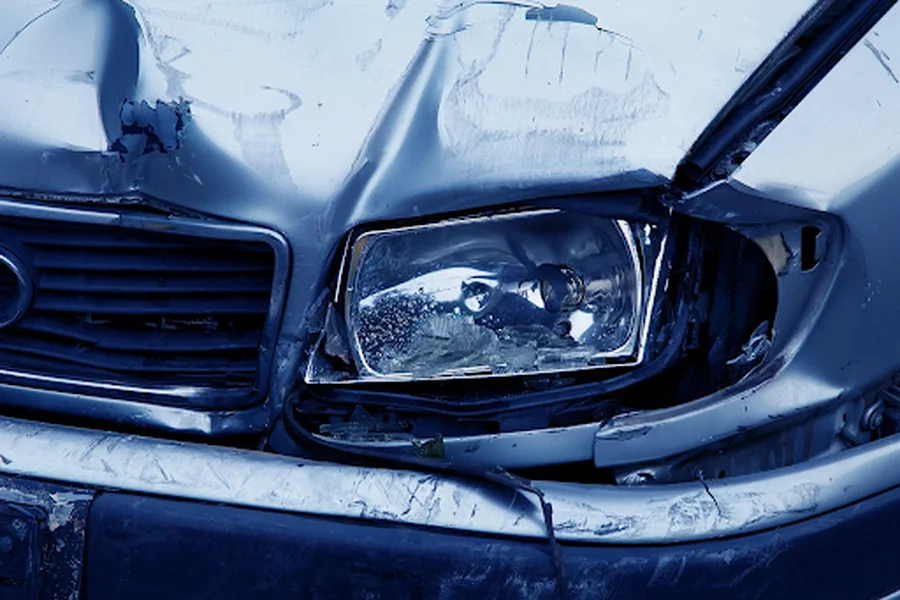
Ever been in a crash and worried it was partly your fault?
Listen…most car accidents aren’t cut and dry. Each driver is typically at least somewhat at fault. How much fault is apportioned determines your recovery amount.
This is where comparative negligence comes in.
No.. It’s not “pain and suffering”.
It’s one of the most crucial (and most misunderstood) aspects of any auto accident case. Mess this up and you could forfeit your entire claim. Handle this correctly and you preserve every dollar you’re entitled to.
What you’ll discover:
- What Is Comparative Negligence?
- How At-Fault Driver Liability Gets Decided
- Why Your Percentage Of Fault Matters So Much
- How To Protect Your Claim
What Is Comparative Negligence?
Contributory negligence is a legal doctrine that divides the fault among all parties to an accident.
Rather than placing blame on one driver, the law examines each driver’s negligent behavior. Each party is then assigned a percentage of fault. That percentage determines your recovery amount.
Consider a pie. If you were 20% at fault for the accident, you “own” 20% of that pie. The other driver owns 80% of the pie.
So your payout drops by your share of the blame.
Here’s an example to illustrate how it works. Let’s say your damages totaled $100,000.00. And you were 20% at fault. You don’t get $100k. You would get $80k. Because your percentage is deducted from the top.
Pretty straightforward, right?
This is exactly why liability and more specifically at-fault driver liability is such a big deal. Most of these cases boil down to one central question: Who did what to who and how much? If you’ve been injured in a collision and are unsure of where you stand, your best bet is to team up with knowledgeable lawyers such as Real Tough Lawyers who can help prove the other driver was primarily at fault.
And the stakes are higher than most people think.
The CDC says there were more than 2.8 million visits to emergency rooms for injuries suffered in crashes last year alone. Millions of victims who suddenly need to know: who’s paying?
How At-Fault Driver Liability Gets Decided
So who actually decides the percentages?
It’s all about evidence. Insurance adjusters and judges consider anything they can obtain related to establishing at-fault driver liability:
- Police reports
- Witness statements
- Photos of the scene
- Traffic camera footage
- Vehicle damage
The strength of your case depends on how much evidence you have. That’s why your actions immediately following a crash are so important.
Here’s why it’s a big deal:
The other driver’s insurance company wants to blame you for everything they can. Why? Because the more they can blame you, the more they don’t have to pay.
If they can get you found 40% at fault instead of 10%, they cut your recovery significantly.
But that’s exactly how the game is played.
The best news is that evidence trumps these maneuvers. If you have proof that the other driver ran the light, was texting, or speeding their percentage of fault increases. Yours decreases.
Why Your Percentage Of Fault Matters So Much
Now here is where things get serious.
States don’t all approach fault the same manner. Some follow “pure” comparative negligence and others follow “modified” comparative negligence. The difference can be significant.
The two systems work like this:
Pure comparative negligence allows you to recover damages even if you are mostly at fault. For example, you could recover damages even if you were found to be 90% at fault.
With modified comparative negligence there is a bar. In most states that follow this rule, if you’re more than 50% at fault, you recover nothing. Zip.
Florida is a great example of how much this matters.
Florida operated under a pure system for 50 years. As of March 2023 they changed to a modified system with a 50% bar. You can no longer collect damages if you are found to be more than 50% responsible for your accident.
That’s a massive change.
In the fault states that have adopted modified comparative negligence, that 50% threshold means total loss of recovery.
So the line looks like this:
- 50% or less at fault = you can still recover damages
- 51% or more at fault = you recover nothing
That’s why the insurance company always fights tooth and nail to increase your percentage of fault. Go over that threshold and poof your claim is gone.
How To Protect Your Claim
Take a deep breath. There are lots of things you can do to preserve your claim and protect yourself against unfair criticism.
The most important thing? Build a strong case from the start.
Here’s what to do at the scene:
- Take photos of everything – the cars, the road, the signs
- Get the names and numbers of any witnesses
- Call the police and get an official report
- See a doctor, even if you feel fine
- Avoid saying “sorry” or admitting fault
The last one is key. Saying sorry can be used against you as an apology later. Say please and thank you, but don’t apologize.
Why should you care about all of this? Injuries can be life-altering. Crash injuries can leave you with staggering medical expenses. The average cost for an emergency room visit due to a crash is about $3,300 per person over the course of a lifetime.
That’s real money you shouldn’t have to pay because someone else was careless.
Taking notes creates an evidence trail that you can use to prove your story. And your story is what protects your percentage of fault. Because in a modified comparative negligence state, that percentage can mean the difference between a payout and zero.
Lastly, don’t try to go it alone.
Insurance companies do this 24/7. They know all the gimmicks to place fault on you. It helps to have an advocate who knows at-fault driver liability in and out.
Bringing It All Together
Comparative negligence can be a lot simpler than you think. Think of this: how fault is allocated determines your recovery.
To quickly recap the key points:
- Comparative negligence splits fault between drivers
- Your payout drops by your percentage of blame
- “Modified” states can bar you completely if you’re over 50% at fault
- The other side will always try to blame you more
Vehicle collisions occur quickly. The battle for who is at fault can take months. Millions of people are injured each year while driving. Understanding how at-fault driver liability works will leave you ahead of the game.
Okay. So self preserve. Collect evidence, watch your mouth and surround yourself with the right people.
Because when it comes to your claim, every percentage point counts.

