
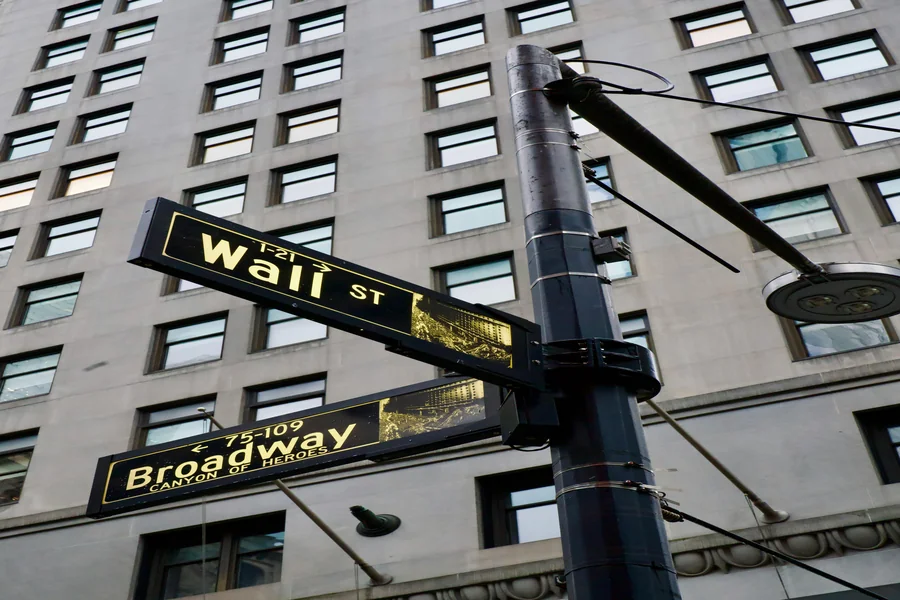
The concept of moving Wall Street on-chain had long been a crypto mantra rather than a legitimate institutional plan. Some banks, asset managers, brokers and exchanges were still in a proof-of-concept stage with blockchain pilots. That is changing. Blockchain infrastructure is now mainstream in financial discussions with the introduction of Tokenized Treasuries, digital settlement rails, stablecoins, on-chain funds, and real-world asset platforms.
This transformation also affects how investors and traders perceive market access, as platforms like BitDelta Crypto Trading are integrated into a broader digital asset landscape increasingly intertwined with crypto rails, tokenized assets, and traditional finance.
Tokenization Has Moved Beyond the Pilot Stage
Tokenization of real-world assets is the most obvious indicator of Wall Street’s on-chain transformation. These are traditional assets like government bonds, money market funds, commodities, private credit, or equities represented on blockchain networks. It’s not just that the assets are digital. That ownership, transfer, settlement and recordkeeping may be able to become faster and more programmable.
One of the most significant examples has been the tokenization of U.S. Treasuries. They provide an asset class that is familiar and has a clear use case in the institutional market: yield-bearing, dollar-denominated exposure that can traverse blockchain-based financial systems.
Tokenized Treasuries can be used as collateral, treasury management, and as a more secure way to store idle stablecoin balances for crypto-native businesses. Traditional institutions can use blockchain infrastructure to experiment without relying on volatile assets.
This is why the conversation has now changed. It’s no longer a question of whether blockchain can be used for financial instruments on Wall Street. It is asking which instruments should go first.
Stablecoins Are Becoming Settlement Infrastructure
Stablecoins are another factor making the on-chain shift feasible. The most significant aspect of stablecoins for businesses and financial institutions is the lack of speculation. It is a settlement. Digital tokens backed by dollars can be transferred rapidly across country lines, outside of traditional banking hours and enable programmable payments.
That renders stablecoins pertinent to trading, remittances, corporate treasury, fintech platforms, and cross-border commerce. They also serve as a link between crypto markets and traditional assets. To make tokenized funds, commodities, and Treasuries trade efficiently on-chain, they must have liquid settlement rails. Stablecoins are increasingly filling that role.
Moreover, this does not remove the risk, however. Issuer supervision, redemption rights, reserve quality, systemic exposure and sanctions compliance are still important considerations. But the business case is now more difficult to ignore. Stablecoins are no longer just tools for providing liquidity to exchanges. They are joining the payments-and-settlements fray.
Asset Managers Are Testing New Distribution Models
On-chain finance provides an asset manager with a new distribution channel. A tokenized fund may be able to reach investors via digital platforms, be integrated into digital wallets, settle faster, and maintain more transparent ownership records. It can also open up new opportunities in fractional access, automated compliance checks, and programmable transfer restrictions.
This is important since financial products are sometimes as dependent on distribution as on performance. Tokenization can facilitate the accessibility, transferability, and usage of assets in the digital finance landscape, making it strategically significant. It can still be a Treasury fund, a money market vehicle, or a commodity exposure, but the wrapper will alter how the product moves.
That said, this is why big institutions are interested. It is not about replacing all of the traditional systems in one go. It’s about recognizing where blockchain tracks make sense to deploy, where they can make operations more efficient.
Exchanges Are Becoming Hybrid Marketplaces
Crypto exchanges are evolving as well. Most started as platforms for trading and investing in digital tokens, but the next step could be hybrid finance. Traditional crypto assets could be joined by tokenized stocks, funds, commodities, and yield products, thereby providing consumers with a broader array of financial products on digital platforms.
This alters the competitive landscape. Competition that used to be largely based on coin listings, liquidity, and fees could shift toward regulated product access, custody, compliance, settlement speed, and institutional connectivity. Drawing a line between crypto exchange, brokerage and fintech platform becomes less clear.
Furthermore, this is a good thing and a bad thing for Wall Street. Tokenization could be the way for traditional companies to modernize distribution, while crypto-native platforms could further venture into the financial services sector.
Compliance Is the Deciding Factor
Technology isn’t the only obstacle to Wall Street’s on-chain future. It is compliance. Clear regulations are required by institutions regarding custody, investor eligibility, disclosures, asset backing, audits, transfer controls, anti-money laundering systems and tax reporting.
It is here that the next phase of tokenization will be won or lost. If banks, regulators, and institutional investors lack confidence in the product’s legal and operational structure, it won’t scale. But alongside fast settlement, credible governance is as important as in on-chain finance.
That’s why permissioned systems, regulated custodians and compliance-oriented token standards are in the spotlight. Early, open-ended crypto boom is not the way the institutional version of on-chain finance will appear. It will be more regulated, more recorded, and more in tune with current financial regulations.
The Onchain Shift is about Infrastructure
The on-chain turn of Wall Street is not about hype. It’s an infrastructure issue. Financial institutions are wondering if blockchain rails can lower settlement friction, enhance transparency, enable new collateral models and facilitate digital distribution. The assets, as such, may be well known. It is the operating layer that changes.
It means that the present moment is significant. From theory to implementation, from experimental pilots to actual product, actual users and actual balances. Not all assets will be on-chain, and not all blockchain projects will weather the institutional storm. The way is well defined, however.
Wall Street no longer sits on the sidelines and watches crypto. It is taking the pieces that resolve practical business issues and constructing them into the financial stack. While it might not be the crypto revolution early adopters envisioned, it could be more sustainable: faster settlement, wider access, programmable assets, and a financial system in which on-chain rails are no longer experimental.

