
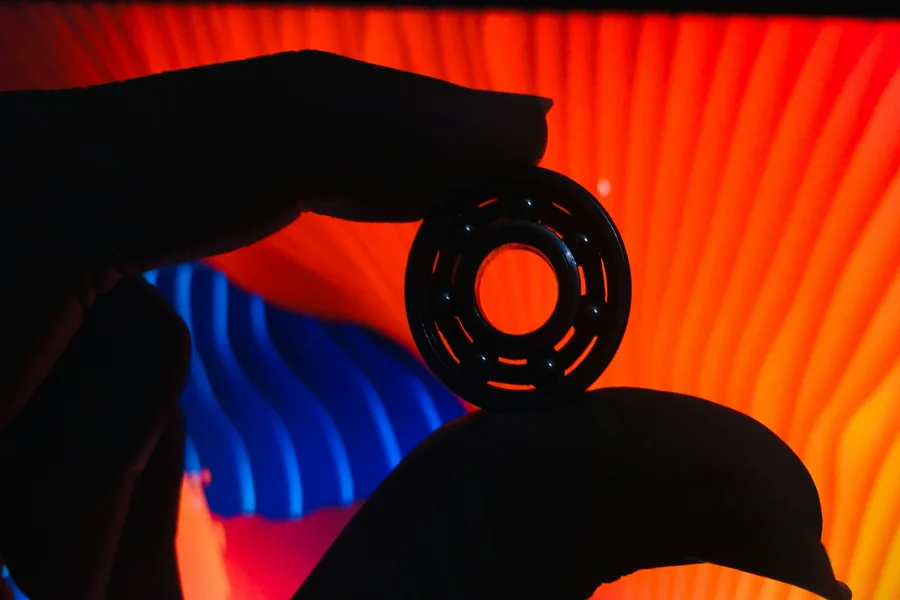
Hybrid ceramic bearings, steel rings combined with silicon nitride balls, have moved well beyond niche status and are now the specified solution in some of the most demanding industrial environments on the market. The shift is being driven by measurable performance advantages that conventional all-steel bearings cannot match, particularly in applications where speed, electrical insulation, corrosion resistance, and service life are all critical at the same time.
The Core Advantages of Silicon Nitride Balls
Silicon nitride ceramic balls are significantly harder than steel, which reduces the contact deformation between the ball and raceway under load. This translates directly into lower friction, higher achievable speeds, and substantially extended bearing life, typically four to eight times longer than a comparable all-steel bearing in the same operating conditions. The material is also electrically non-conductive, which makes hybrid ceramic bearings the correct specification for electric motors and electric vehicle drivetrains, where current passing through conventional steel bearings causes progressive erosion of the raceway surface that eventually leads to premature failure.
The density of silicon nitride is roughly 60 percent lower than steel, which means ceramic balls generate significantly less centrifugal force at high rotational speeds. This is a meaningful advantage in applications like high-speed spindles, turbines, and precision instruments where speed capability is a primary design constraint.
Where Specification Matters Most
Working with the right bearing manufacturer is what determines whether a hybrid ceramic bearing actually delivers on its theoretical performance advantages in a specific application. Material grade, lubrication selection, ring steel specification, and sealing configuration all need to be matched to the operating environment, which is why customized bearing solutions are increasingly preferred over off-the-shelf alternatives in sectors like aerospace, pharmaceutical manufacturing, food and beverage processing, and high-performance electrical motor production. The bearing that performs well in one environment may be entirely wrong for another, and that distinction is only captured through application-specific engineering.
Corrosion Resistance in Food and Beverage Manufacturing
The machinery used in food and beverage manufacturing is exposed to temperature fluctuations, cleaning chemicals, moisture, and several other aggressive factors, so it’s only natural for them to corrode faster. If these machineries are made from conventional steel, they are also prone to contamination risk and lubricant degradation, which will force businesses to run maintenance more often. Sometimes companies might even deal with increased downtime when the equipment is too severely damaged. But if they switch to hybrid bearings, or pair them with specialized seals or stainless steel rings, they benefit from not only more stable but also more hygienic solutions because it’s widely known that silicon nitride is highly resistant to corrosion and doesn’t suffer the same level of damage when exposed to moisture, as steel does.
The advantages ceramic bearings bring are extremely important, especially for a business that cannot afford a short interruption because it would cause substantial financial losses and maybe even lead to supply chain disruption. Food manufacturers, for example, prioritize production efficiency and hygiene standards, so for them it’s vital that the bearings are as performative as possible so they can remain operational.
Precision and Contamination Control in Pharmaceuticals
Let’s move to the pharmaceutical sector, which honestly deals with the same issue. In fact, precision and contamination control are even more critical in this sector than corrosion resistance. Pharmaceutical businesses usually rely on centrifuges, high-speed systems, and sterile processing equipment to complete their operations, which require stable rotational accuracy while minimizing particulate generation. They can benefit from the use of hybrid ceramic bearings because these elements produce less wear debris in the long run. Ceramic balls are designed to maintain smoother surface integrity for a longer period, even if they have to function under load. Lower friction means reduced operating temperatures, so the lubricant maintains its performance in the long run and protects the sensitive parts of equipment against thermal stress. The performance gains provided by hybrid ceramic bearings aren’t considered optional improvements in an industry like pharmaceuticals because in this sector, equipment reliability, validation, and consistency are vital.
Electrical Protection in Modern Motor Systems
Electrical systems have also played a major role in the search for alternatives to traditional steel bearings. Modern industrial motors rely more and more on variable frequency drives because they improve speed control and energy efficiency. But unfortunately, they also introduce static electrical currents into the bearing system, which can create microscopic electrical discharge, also known as fluting, when they pass through conventional bearings. When this happens, the raceway surface gets damaged and can generate noise, vibration, and fail to work entirely, in the end. When companies replace traditional steel bearings with hybrid ceramic bearings, they no longer deal with this issue because the latter ones interrupt the electrical path, as the silicon nitride also has an insulation role. As industries continue to integrate electrical manufacturing systems and expand the automation infrastructure, protection against electrical bearing damage has become essential, and therefore, the need for hybrid solutions has increased widely over the last couple of years.
The Renewable Energy Sector’s Growing Dependence On Hybrid Bearings
The renewable energy sector should also be listed among the factors that sped up the transition to hybrid ceramic bearings. Let’s take wind turbines, for example, they operate under fluctuating loads, have to face changing weather conditions, and are quite difficult to maintain. While replacing a failed bearing in an offshore wind farm might not be extremely expensive, logistically, the process is quite complex because the process requires favorable weather conditions and the presence of a specialized crew. It’s logical for operators to prioritize components that minimize failure risk and maximize service intervals. They have the long run in mind. Hybrid ceramic bearings have become more common in the renewable sector because they are more resistant to electrical damage, reduce friction, and have lower wear rates. Hydroelectric systems and high-efficiency generators are also examples of great use of hybrid ceramic bearings.
Final Words
As expected, cost considerations are a major part of the conversation regarding the subject of hybrid ceramic bearings because they tend to be more expensive than traditional steel solutions. However, procurement decisions in the industrial world are rarely based only on the price. Factors like energy consumption, downtime costs, maintenance labor, and replacement frequency are among the most important when making a decision.

