
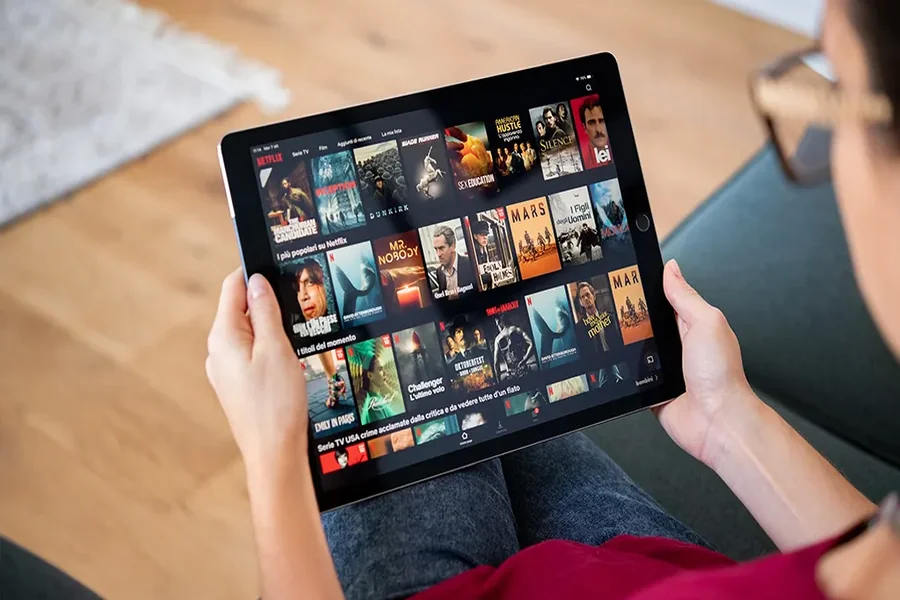
For over a decade, video-on-demand (VOD) streaming services were considered the pinnacle of home entertainment evolution. We have shifted from rigid television schedules to the freedom of choosing whatever to watch at any time. However, the dominance of platforms like Netflix, Disney+, and Amazon Prime now faces an existential threat that comes not from similar competitors, but from a fundamental shift in how humans want to be entertained. The passive “sit and watch” model is increasingly considered outdated by a new generation growing up with the internet at their fingertips.
The reality is, modern viewers are no longer satisfied with merely being silent observers. They crave engagement, community, and a sense of ownership over the content they enjoy. This phenomenon is clearly visible when we compare the time spent by young people on interactive social platforms versus movie streaming apps. Although blockbuster movies still have their place, daily “screen time” is now more dominated by apps that allow users to comment, create response content, or influence the outcome of a broadcast in real-time.
This shift marks a new era where entertainment value is no longer measured solely by cinematography quality or award-winning scripts. Instead, that value now depends on the extent to which the platform allows viewers to be part of the narrative itself. This is not merely a competition of content; this is a competition to win over consumer psychology that increasingly demands agency and interaction in every moment of their leisure time.
The shift from passive viewing to active user participation
The psychology behind media consumption has changed drastically in the last five years. Previously, entertainment was a form of escapism where one could “turn off their brain” after a long day of work. However, today, entertainment is about social connection and continuous mental stimulation. Viewers are now more inclined to choose platforms that give them the power of control. The satisfaction derived from pressing the “like” button, sending virtual gifts, or interacting with content creators directly provides dopamine spikes that cannot be matched by static two-hour films.
In today’s digital environment, users in this region are increasingly shifting to platforms offering dynamic two-way interactions, from participation in e-sports tournaments to gambling at the best online casino malaysia has to offer, which are gaining ground among alternative entertainment seekers. This desire to be directly involved—whether through strategic gambling at the card table, real-time voting, or simply chatting in chat rooms—shows that passivity is the enemy of user retention. Platforms that fail to provide these elements of participation are often viewed as lonely and boring by younger demographics.
Furthermore, this shift is also driven by the desire to be part of “the moment”. Passive viewing can be postponed; you can watch a popular series next month without losing anything other than the risk of being exposed to “spoilers”. Conversely, interactive entertainment often happens in real-time. If you are not there during a video game live stream or a Q&A session, you miss that communal experience. This “Fear of Missing Out” (FOMO) element becomes a strong driver forcing users to log in every day, something difficult to achieve by a static movie library.
How interactive technology is reshaping modern viewer expectations
Technological advancements have enabled interactivity that was previously considered impossible or too expensive to implement on a large scale. High internet speeds and the availability of sophisticated mobile devices mean barriers to real-time interaction are almost non-existent. Viewers now expect immediate feedback. When they type a comment in a live broadcast, they want their name mentioned. When they vote in an interactive poll, they want to see the graph change immediately on the screen. This technology has trained our brains to expect instant gratification and social validation that does not exist in traditional television formats.
New entertainment platforms are now integrating gamification features into the viewing experience. This is not just about video games, but the application of game mechanics in non-gaming content. For example, badge systems for loyal fans, reward points for continuous viewing, or the ability to influence storylines in fictional content. This technology transforms viewers from passive consumers into active participants who invest their time and emotions into the platform’s ecosystem. This creates a “sticky loyalty” that is far more difficult to break compared to a monthly subscription that can be cancelled at any time.
Additionally, the integration of artificial intelligence (AI) and augmented reality (AR) is beginning to blur the lines between the physical and digital worlds. Interactive face filters on social media are early examples of how technology allows users to manipulate their own image as part of entertainment. This expectation is now permeating into all forms of media. If a platform only offers flat video without any additional interactive layers or the ability to share clips creatively, it will feel “empty” and less valuable in the eyes of consumers already accustomed to rich multimedia experiences.
Growing digital consumption trends in Asia
Asia, and specifically Southeast Asia, is at the forefront of this digital entertainment revolution. The region has a young, tech-savvy population and very high mobile penetration rates. In Malaysia for example, the recovering economic landscape plays a crucial role in driving digital spending. Recent economic data shows that the tourism sector of Malaysia generated RM291.1 bilion in 2024, a figure that reflects strengthening purchasing power and the society’s willingness to spend on lifestyle experiences, including digital entertainment.
Furthermore, culture in Asia places great importance on community, and this translates into digital media consumption habits. Applications that allow for watch parties or community chat rooms are very popular here. Unlike Western culture which may prioritize individual privacy, consumers in Asia often view entertainment as a social activity. Traditional streaming platforms that are solitary in nature often fail to meet these social needs, opening wide spaces for competitors offering experiences that are more communal and socially connected.
The future of entertainment platforms prioritizing user engagement
Looking ahead, it is clear that the platforms that will survive are not those with the largest movie libraries, but those with the most active communities. Media giants are now beginning to realize that they need to evolve or risk being left behind. We are set to see more hybrid experiments where TV series are combined with mobile game elements, or movies that allow viewers to choose their own endings via remote control. The boundaries between “player”, “viewer”, and “creator” will become increasingly blurred to the point where these terms may no longer be relevant to distinguish user roles.
Another important aspect of the future is the creator economy. Future platforms will give more power and tools to users to create their own entertainment. Instead of just spending millions of ringgit on a single drama series, platforms will provide the infrastructure for thousands of independent creators to produce micro-content that is highly relevant to niche audiences. This not only reduces production costs but also ensures content remains fresh and diverse, something difficult to achieve by traditional studios that move slowly.
Ultimately, the winners in this war for attention are those who understand that human attention is the most valuable currency. To obtain this currency, platforms must offer a return on emotional investment to users. Whether through a sense of togetherness, the satisfaction of competing, or the joy of creating, interactive elements are the key to unlocking users’ wallets and time in the coming decade. The era of “just watching” is over; the era of “experiencing together” has just begun.

