
Introduction
In today’s electronics industry, choosing the right PCBA supplier is critical to ensuring product quality, reliability, and time-to-market. PCBA manufacturing is not just about assembling components onto a PCB—it is a complex, highly controlled process that integrates engineering, sourcing, production, and testing into a seamless workflow. Whether you are developing a prototype or scaling to mass production, understanding how PCBA manufacturing works can help you make better decisions and avoid costly mistakes.
What Is PCBA Manufacturing?
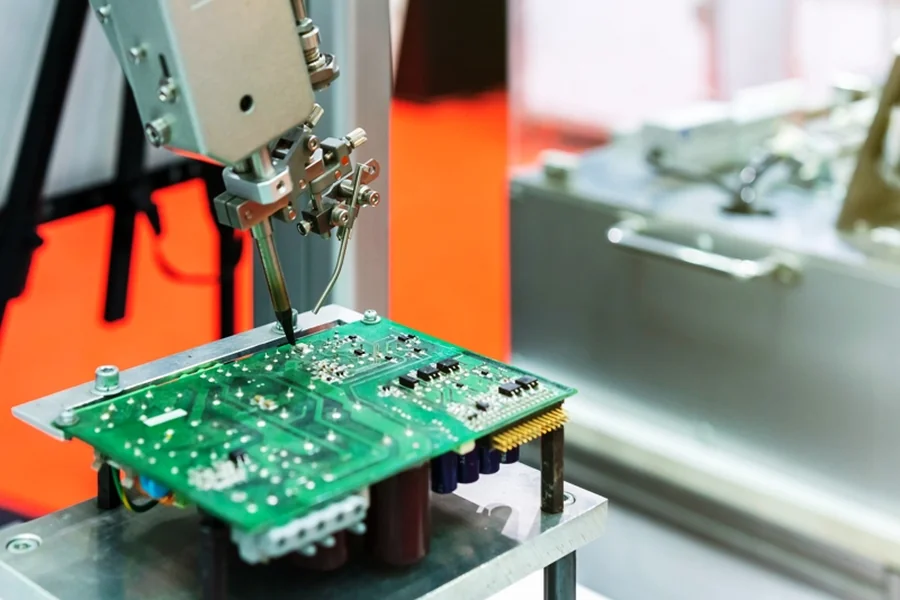
PCBA manufacturing (Printed Circuit Board Assembly manufacturing) refers to the process of mounting and soldering electronic components onto a bare PCB to create a functional electronic assembly.
It typically includes:
- Component sourcing (BOM procurement)
- SMT (Surface Mount Technology) assembly
- Through-hole assembly
- Soldering processes (reflow / wave soldering)
- Inspection and testing
- Final assembly (box build, if required)
A professional PCBA supplier will provide turnkey PCBA manufacturing services, covering everything from raw materials to final delivery.
Core Processes in PCBA Manufacturing
1. Solder Paste Printing
This is the first step in SMT assembly.
- Solder paste is applied to PCB pads using a stencil
- Ensures accurate placement of components
- SPI (Solder Paste Inspection) is often used to verify volume and alignment
Why it matters: Poor printing leads to defects like bridging, insufficient solder, or tombstoning.
2. Pick and Place (SMT Placement)
Automated machines place components onto the PCB.
- High-speed placement for resistors, capacitors, ICs
- Precision placement for fine-pitch and BGA components
- Controlled by pick-and-place programming files
Key advantage: High efficiency and consistency for large-scale PCBA manufacturing.
3. Reflow Soldering
The PCB passes through a reflow oven where solder paste melts and solidifies.
- Controlled temperature profile is critical
- Ensures reliable solder joints
- Different zones: preheat → soak → reflow → cooling
Common risks: Cold joints, voids, solder balls if the profile is not optimized.
4. Through-Hole Assembly
For components that require stronger mechanical connections:
- Manual insertion or automated insertion
- Wave soldering or selective wave soldering
Selective wave soldering is preferred for complex, high-density boards due to higher precision.
5. Inspection and Quality Control
Quality assurance is a core part of PCBA manufacturing.
Typical inspection methods include:
- AOI (Automated Optical Inspection): Detects visible defects
- X-ray Inspection: Checks hidden joints (e.g., BGA, QFN)
- SPI: Ensures solder paste quality before placement
These steps help identify issues early and reduce rework costs.
6. Testing (Functional & Electrical)
Testing ensures the assembled board works as intended.
- Flying Probe Testing: Ideal for prototypes and small batches
- ICT (In-Circuit Test): Checks component values and connections
- FCT (Functional Test): Verifies real-world operation
A reliable PCBA supplier will customize testing strategies based on your product requirements.
Key Factors That Affect PCBA Manufacturing Quality
1. Design for Manufacturability (DFM)
- Optimizes PCB layout for production
- Reduces assembly defects
- Improves yield and lowers cost
2. Component Quality
- Authentic and traceable components
- Proper storage (MSD control, ESD protection)
- Supplier management
3. Process Control
- MES systems for traceability
- Real-time monitoring of production parameters
- Standardized operating procedures
4. Certifications and Standards
Look for suppliers compliant with:
- ISO 9001 (quality management)
- IATF 16949 (automotive)
- ISO 13485 (medical)
- IPC-A-610 (assembly standards)
Prototype vs Mass Production in PCBA Manufacturing
| Aspect | Prototype | Mass Production |
| Volume | Low | High |
| Flexibility | High | Moderate |
| Testing | More flexible (flying probe) | More structured (ICT/FCT) |
| Cost per unit | Higher | Lower |
| Lead time | Fast (24–72 hours possible) | Optimized for scale |
A capable PCBA supplier can seamlessly scale from prototype to volume production.
How to Choose the Right PCBA Supplier
Selecting the right partner is crucial for long-term success.
1. Technical Capability
- SMT lines, advanced equipment
- Ability to handle HDI, fine-pitch, BGA
2. Quality Assurance System
- Multi-stage inspection
- Traceability and documentation
3. Engineering Support
- DFM / DFA feedback
- Early-stage design optimization
4. Turnkey Service Capability
- BOM sourcing
- PCB fabrication + assembly
- Box build integration
5. Delivery and Responsiveness
- Fast turnaround capability
- Clear communication and support
Advantages of Professional PCBA Manufacturing Services
Working with an experienced PCBA supplier provides:
- Faster time-to-market
- Reduced production risk
- Stable and repeatable quality
- Cost optimization through scale
- Access to advanced manufacturing technologies
Conclusion
PCBA manufacturing is the backbone of modern electronics production, transforming PCB designs into fully functional products. From solder paste printing to final testing, every step requires precision, control, and expertise.
Choosing the right PCBA supplier is not just about price—it is about reliability, engineering support, and long-term partnership. By understanding the complete PCBA manufacturing process and key quality factors, you can ensure your product moves smoothly from concept to mass production with confidence.
FAQs
1. What is the difference between PCB and PCBA?
- PCB: Bare board without components
- PCBA: Fully assembled board with components
2. What files are required for PCBA manufacturing?
Typically:
- Gerber files
- BOM (Bill of Materials)
- Pick-and-place file
- Assembly drawings
3. What is the typical lead time for PCBA manufacturing?
- Prototype: 24–72 hours
- Mass production: 1–4 weeks (depending on complexity)
4. Which testing method is best?
- Prototype: Flying probe
- Mass production: ICT + FCT combination

