
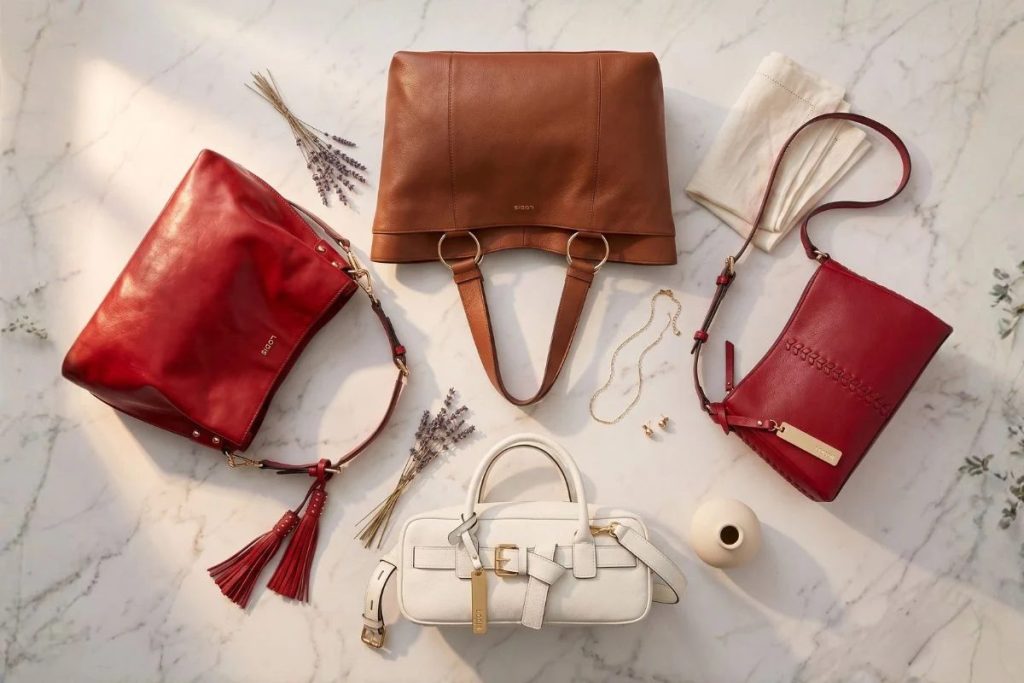
Proper material selection, meticulous craftsmanship, and practical wear and tear are the hallmarks of an authentic leather tote. Cheaper imitations copy the shape, but their surfaces, stitching, handles, and linings reveal different priorities.
A shopper who knows what to inspect can judge a bag before paying for it, even when product images hide texture and internal details. The clearest comparison starts with the leather, then moves through construction, comfort, and care.
Start With The Leather
For shoppers comparing leather tote bags, the first task is separating full-grain or other genuine leather from coated fabric and plastic-based alternatives. Full-grain leather retains the hide’s natural grain, so small variations in pores, colour, and creases are normal. A uniform plastic sheen often signals a surface coating rather than natural material, although appearance alone cannot confirm the composition.
Genuine leather usually becomes softer through regular use. Its surface develops subtle marks and colour changes, rather than cracking into a plastic-like film. A synthetic imitation often retains the same texture throughout, with repeated patterns that appear too consistent across the entire bag.
Product descriptions also deserve close attention. Terms such as full-grain leather, top-grain leather, split leather, bonded leather, and polyurethane describe different materials. “Leather-look” describes an appearance, not a leather grade.
Examine the Construction
A well-made tote shows careful work around areas that carry the most strain. Stitching should follow straight lines, with even spacing and secure ends. Loose threads, skipped stitches, and uneven seams create weak points around the handles, opening, and side panels.
Handles need close inspection because they carry the bag’s load. Leather handles should connect through reinforced stitching, rivets, or another visible method suited to the bag’s construction. A thin handle attached only to the outer surface places pressure on a small area and wears sooner.
The edges provide another useful clue. Finished leather edges should feel smooth and consistent. Rough layers or peeling coating often indicate a lower-grade material or weak finishing process. Edge treatment differs between makers, but careless finishing remains easy to spot.
Check the Interior
The inside of a tote determines how well it works during ordinary days. A cotton-lined interior, such as the one listed on the inspected collection page, creates a separate surface for belongings and makes routine cleaning easier than an exposed, rough interior.
Pockets should sit securely and open without pulling the surrounding lining. A zip should move smoothly along its track, while magnetic or press-stud closures should meet cleanly. Hardware should feel substantial enough for its purpose and remain firmly attached after repeated use.
Capacity also matters more than the exterior size suggests. A tote should hold its intended contents without forcing the top edge, stretching the handles, or distorting the base. Internal measurements provide a more useful comparison than photographs alone.
Assess Comfort and Function
A genuine leather tote still needs to suit its owner’s routine. Handle drop determines whether the bag sits comfortably on the shoulder or works mainly as a hand-carried style. A structured shape allows easier access, while a softer design rests closer against the body.
Weight deserves attention before purchase. Leather adds substance, while hardware, lining, and reinforced handles add more. An empty tote that already feels heavy becomes tiring after carrying a laptop, water bottle, wallet, and daily essentials.
Closure type affects security and access. A zipped opening protects contents during commuting, while an open top allows faster access but gives less protection against items falling out. The better choice depends on travel habits and how the tote will be used.
Expect Useful Ageing
Leather changes with handling, sunlight, moisture, and friction. That change differs from premature deterioration. A quality hide develops a patina, while a poor coating flakes, splits, or exposes the fabric base beneath the surface.
Care remains simple when it matches the material. Keeping the tote dry, wiping spills promptly with a soft cloth, and storing it away from direct heat protects the leather. Leather conditioner should suit the finish and should be tested on a hidden area first.
Overloading causes avoidable damage. Excess weight stretches handles, pulls seams, and distorts the base. Rotating the contents and storing the tote upright helps preserve its shape between uses.
Judge Value Beyond The Price Tag
A cheaper imitation can cost less at checkout, but its replacement cycle matters. A tote that loses its finish, breaks at the handles, or needs replacing after limited use provides poor value despite its lower starting price.
A genuine leather tote earns its price through the combined quality of its material, construction, and practical design. Buyers should compare the leather description, seam quality, handle attachment, lining, closure, dimensions, and care requirements before judging the cost.
The inspected collection page lists full-grain leather shoulder bags, cotton-lined interiors, secure closures, and different carrying formats. These details provide useful comparison points, although each product still requires its own material and construction check.
Conclusion
A genuine leather tote stands apart through evidence that a shopper can check: natural grain variation, secure stitching, reinforced handles, finished edges, a practical interior, and hardware suited to its use. Buyers should read the material description, inspect close-up images, compare measurements, and consider the empty weight before ordering.
After purchase, sensible storage, prompt spill removal, and restrained loading protect the investment. These checks turn a style choice into a practical quality assessment.

