
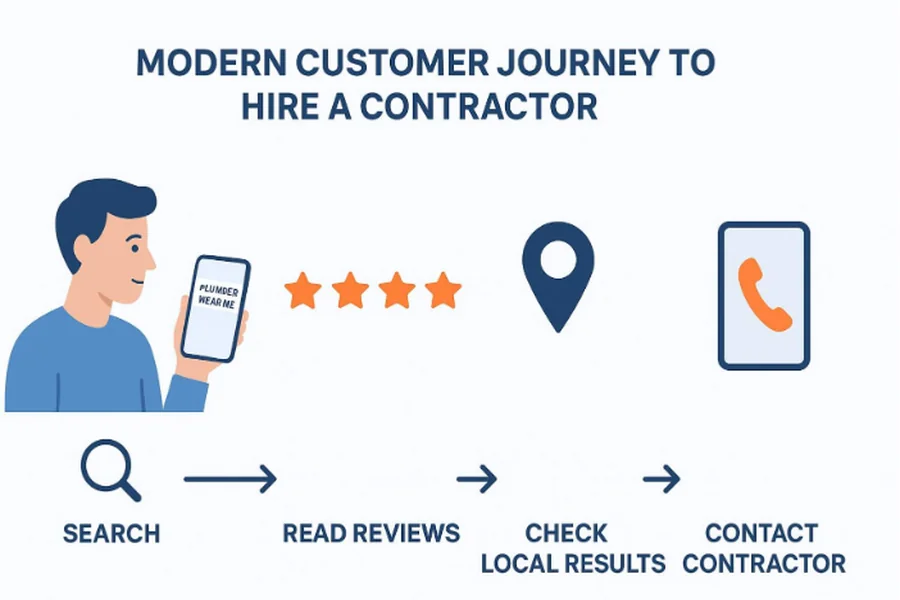
Many contractors wonder why the phone stays quiet even though their work is great. A common reason is simple: people can’t find them online. This often happens when a business leans too much on old lead sources and doesn’t have solid digital marketing skills.
Today, most customers use Google, review sites, and even AI tools to find and compare contractors.
If your business doesn’t show up where people search, you lose jobs before you ever get the chance to give a quote. If you want to fix this problem, we recommend a marketing agency for contractors who focus on building a strong online presence.
Why Online Visibility Is Essential for Contractors
As more customers search online first, being easy to find on the internet is no longer optional for contractors. It affects whether new clients discover you while they are actively looking, which directly impacts leads and income.
What Does Online Visibility Mean for a Contracting Business?
Online visibility is more than owning a website. It means your business shows up often and in the right places when someone is ready to hire. This includes appearing near the top of Google results, showing in the local map listings, being visible in normal search results, and even being mentioned by AI search tools like ChatGPT and Perplexity. It’s about being seen and considered when people type searches like “roof repair near me” or “plumber in San Antonio.”
If your business isn’t showing up in these key spots, you’re missing work. In early 2026, steady leads usually come from steady visibility. That’s the difference between regular calls from good prospects and an unpredictable “feast-or-famine” schedule.
How Online Search Behavior Drives Contractor Selection
How people pick a contractor has changed a lot in the last few years. Many customers no longer ask a few friends and then call a long list of companies. Now, they search on Google, carefully check reviews, and more often ask AI tools for suggestions before narrowing it down to just two or three choices.
This change means that if you don’t appear in those first search results, you don’t get considered. Around 90% of people go online to research home building and renovation services, and 53% start on search engines like Google. Also, 82% of smartphone users use search engines to find local businesses. That makes mobile-friendly websites and strong local SEO a must.
Impact of Online Presence on Lead Generation and Revenue
For contractors, online presence and lead generation are directly connected. Many contractors lose leads because they’re hard to find online-often before a customer ever contacts them. Without a consistent flow of online leads, businesses often fall into “feast-or-famine” patterns, which makes it harder to grow, hire, and plan ahead.
These missed leads can add up to major lost income, often tens of thousands of dollars per year for small to mid-sized contractors. A strong online presence brings more steady calls and better leads, reducing the need to depend on weaker sources. The main difference between a contractor who struggles and one who grows is not skill-it’s being visible when customers are searching.
Common Challenges Contractors Face Without Professional Marketing
Contractors often run into specific problems online. These usually come from old business habits and limited digital marketing experience, which puts them behind in today’s market.
Over-Reliance on Referrals and Traditional Lead Sources
Word-of-mouth has always been important in contracting, and it still matters. But in 2026, depending only on referrals is not a reliable way to grow. Referrals are hard to predict. You might get many leads for a short time, then none for weeks, which leads to uneven work and uneven revenue. That makes it tough to expand, hire, or plan larger projects.
Relying on referrals alone can mean getting only 5-10 leads a month. That’s helpful, but it’s usually not enough for bigger growth goals. Referrals also can’t be scaled the way online marketing can, so many businesses stay reactive instead of in control.
Low Visibility on Google and Search Engines
One of the biggest problems for contractors is being almost invisible on Google. Many contractors are great at building real structures but show up far down in search results. Industry data suggests more than half of construction businesses don’t rank on the first page of Google for their specialty, and some are buried on page 10 or later.
When someone searches “roof repair near me” or “plumber in San Antonio,” only a few businesses show up clearly. If you aren’t in that group, you don’t get the call. This usually comes from not putting enough time or budget into SEO, and not knowing what search engines look for. In a market where most people start online, low rankings can become a serious business problem.
Dependence on Paid Lead Platforms
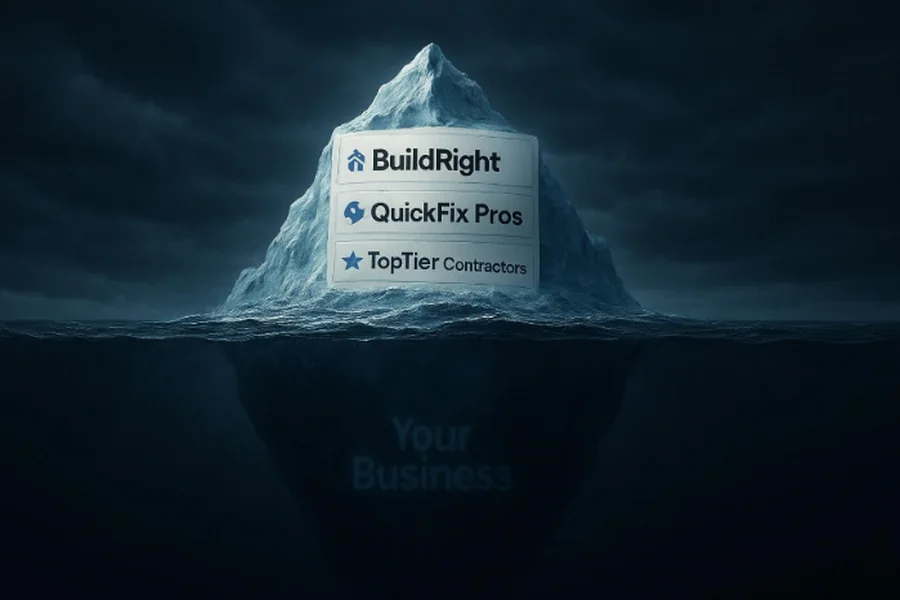
To get leads fast, many contractors use paid lead platforms like Angi or Thumbtack. These can bring leads, but they also bring problems. Leads are often sent to several contractors at once, which quickly turns into price competition. That can cut profit margins and push contractors into competing mainly on price.
Also, leads from these platforms are often less serious than leads from organic search, which can mean fewer closed jobs. Depending on these platforms stops contractors from building their own lead system and keeps them tied to third-party services that can weaken long-term growth and brand recognition.
Inconsistent Online Branding Across Channels
Without marketing help, many contractors struggle to explain what makes them different. Their website copy often sounds the same as everyone else’s, using phrases like “quality, reliability, and experience.” These claims are common and don’t help a customer choose you over another company.
This issue usually shows up across other channels too, like social media pages and business listings. Without a clear brand, strong project photos, and visible testimonials, contractors can look less reliable to potential clients. This often leads to competing on price, which reduces profit and makes it harder to attract clients who care about skill and quality.
Major Factors Behind Weak Online Visibility
There are several reasons contractors struggle to show up online. Most come from not understanding how modern digital marketing works and missing key steps that Google and other platforms reward.
Lack of Local SEO Optimization
Contractors usually serve specific areas, so local SEO is a must. Many businesses don’t do it well. This often means they don’t rank for local searches like “remodeling contractor in Denver” or “plumber near me,” which is exactly what local customers type. It’s also hard to rank in nearby service areas without looking fake or spammy.
A common mistake is having different NAP (Name, Address, Phone) details on different websites and directories. Wrong or mismatched listings confuse search engines and hurt trust, which lowers rankings. Good local SEO depends on knowing how search engines judge local relevance and showing real ties to each service area through content, citations, and local involvement.
Poorly Optimized or Outdated Contractor Websites
Many contractors pay for websites that look nice but don’t bring in traffic or leads. This often happens when a site is built for appearance instead of search performance and clear content. Another issue-especially for sites built or updated in the last two years-is using AI-written content with no real expertise added. Google is getting better at spotting low-value content, often shown by repetitive formatting and heavy use of em dashes, and it usually won’t rank that content well.
Technical problems are also common. Many sites have low domain trust, weak mobile performance (a big issue since over 60% of local searches are on mobile), and missing SEO basics like proper H1 tags (missing on 22% of contractor sites). Many homepages also try to rank for too many keywords, which often results in ranking for none. And “location pages” are often just copied pages where only the city name is changed-Google often ignores or penalizes this.
Insufficient Use of Google Business Profile
A Google Business Profile (GBP) that is missing details or not managed well is one of the biggest wasted chances in local SEO. Your GBP is often the first thing people see, and it shows up in the local map results that get about 40-50% of clicks for local searches. Still, many contractor profiles are incomplete. They may have the wrong categories, weak service descriptions, old photos, or no clear plan for getting reviews.
If you don’t use this free tool well, you miss out on easy visibility. A strong GBP with accurate details, good images, regular updates, and Google Posts can improve rankings and build trust with local customers.
Limited Customer Reviews and Reputation Management
Reviews now play a huge role in hiring decisions. About 87% of people read online reviews before choosing a service, and 85% don’t trust reviews that are older than three months. Contractors who don’t collect reviews and manage feedback often look less trustworthy than competitors who do.
Many contractors do great work but don’t turn happy customers into online reviews. They don’t have a simple system to request, track, and display testimonials. Negative reviews can also be tricky-defensive replies can make things worse. Without a clear reputation plan, a roofer, for example, can lose jobs if they don’t show before-and-after photos or verified reviews, while competitors highlight these trust signals clearly.
Failure to Target the Right Service-Specific Keywords
A common SEO error is going after broad keywords that big directories and national brands already dominate. For example, “construction company” is usually much less useful than “home builder [city]” or “custom home builder [county].” People ready to buy often search with specific phrases.
Many contractor sites also don’t have helpful blog or resource content that answers early-stage questions like “how much does it cost to build a custom home in [state]” or “what permits do I need for a home addition.” If you don’t answer these questions online, you stay invisible during an early trust-building stage, even before someone is ready to call.
How Ineffective Digital Visibility Impacts Contractor Businesses
Poor online visibility does more than reduce a few phone calls. It can slow growth, weaken reputation, and make it harder to compete in a market where online proof matters almost as much as the work itself.
Missed Opportunities for New Leads and Projects
The clearest effect of weak visibility is missed work. If your business doesn’t appear when customers search or compare contractors, you lose jobs before you can even give a quote. This is not a small issue-it can mean tens of thousands of dollars per year in lost income for small to mid-sized contractors.
Without steady online leads, contractors often get stuck in “feast-or-famine” cycles. That makes it hard to plan, buy equipment, or hire, which limits stable, long-term growth.
Loss of Trust in a Review-Driven Marketplace
Customers now depend on reviews and clear online proof when hiring. Without strong reviews, professional replies, and easy-to-find project examples, contractors often seem less trustworthy. People expect to see before-and-after photos, testimonials, and quick communication.
A roofing contractor without strong photos or verified reviews will often lose to competitors who show these trust signals clearly. When you don’t provide what customers want to see, you can look less credible during their research process, which leads to lost jobs.
Competitive Disadvantage vs. Digitally Savvy Competitors
The gap between contractors who show up online and those who don’t is growing fast. As more contractors invest in digital marketing, others fall behind. Contractors who market well online don’t just get more attention-they often spend money more wisely by targeting the right people with clear messaging.
That focus helps them win a larger share of new work. While some contractors still use expensive traditional ads with weaker results, their competitors use SEO, better websites, and reputation management to get strong leads for less. Organic SEO leads can cost as little as $31 per lead when done well. This difference makes it hard for older methods to keep up.
What Professional Marketing Services Provide for Contractors
Professional marketing can turn a weak online presence into a strong business tool. The goal is to fix the online problems contractors face and produce trackable results.
SEO Strategies to Improve Local Search Rankings
Marketing agencies use SEO strategies built for contractors. This starts with detailed keyword research to find the exact terms buyers use, like “home builder [city]” or “custom home builder [county].” They also work to get your business shown in the local map results, which get about 40-50% of clicks for local searches.
Modern SEO also includes Generative Engine Optimization (GEO). This means setting up your content so AI tools like ChatGPT, Perplexity, and Google’s AI Overviews are more likely to mention your business when people ask who to hire. Agencies also build E-E-A-T signals (Experience, Expertise, Authoritativeness, Trustworthiness), which Google rewards, helping your business look like a trusted expert.
Effective Website Design That Converts Visitors into Leads
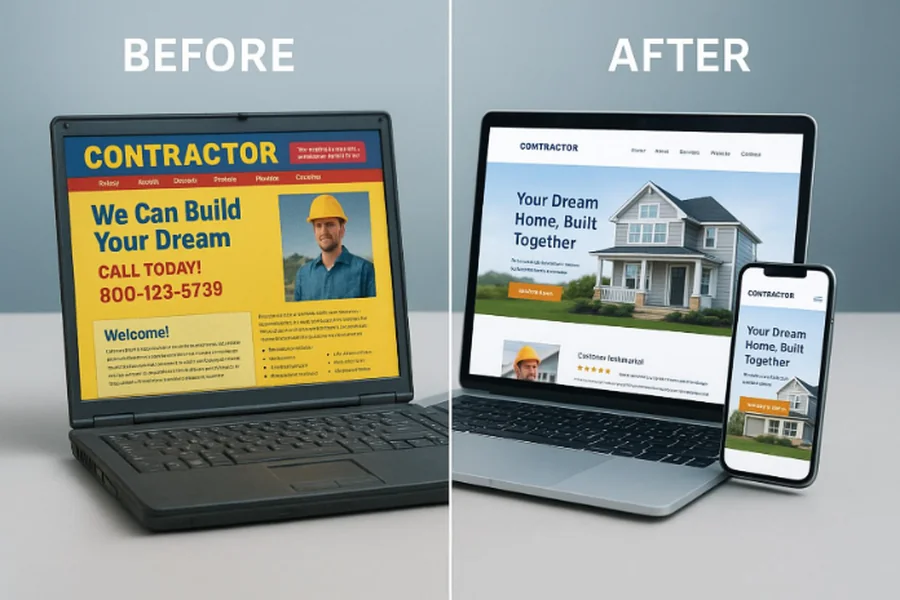
A marketing agency knows a contractor website has to do more than look good-it should generate leads. That means building trust fast and making it simple to call, fill out a form, or request a quote. Instead of vague pages, they build service pages for key jobs like “roof repair,” “fence installation,” or “emergency plumbing,” and optimize each page for search.
These sites are built for mobile and load quickly, which matters since over 60% of local searches happen on phones. They also use clear, expert content that answers questions and shows how you work, supported by strong project photos and videos. A specialist such as BuiltFor Studio can help contractors turn those website elements into a clearer, more lead-focused digital presence. The point is to turn visitors into real leads by giving them a smooth, helpful, trustworthy experience.
Proactive Online Reputation Management
Professional marketing teams set up a repeatable process to build and protect your reputation. This includes asking for reviews after every job, so happy clients actually share their experience online. It also includes a plan for responding to every review, both good and bad.
For good reviews, agencies help highlight them on your website and social pages. For bad reviews, they help you reply calmly, show professionalism, and move the conversation offline to resolve the issue. This steady approach builds trust and boosts credibility in a market where reviews strongly influence decisions.
Consistent Branding and Messaging Across Digital Platforms
Professional marketing also brings consistency across your online presence. Agencies help contractors explain what makes them different, including special skills and technical strengths that customers care about. This keeps your website, social media, and directory profiles aligned with the same message.
Consistency also includes keeping NAP (Name, Address, Phone) details correct everywhere, which matters for local SEO. Agencies often help with visual content too, like before-and-after photos and testimonials, presented in a clear way that shows results and problem-solving. This helps you stand out from contractors who look generic online.
Steps Contractors Can Take To Improve Online Visibility
Professional marketing can handle everything end-to-end, but contractors can also take a few practical steps right away to start improving visibility and getting more consistent leads.
Claim and Optimize Your Google Business Profile
This is one of the highest-impact steps for most contractors. Claim and complete your Google Business Profile (formerly Google My Business) because it often shows up first in local results and on Google Maps. Keep your business name, address, phone number, and hours accurate. Add clear service descriptions, upload strong photos of your work and team, and pick the right primary and secondary categories for your services.
After that, post updates using Google Posts (promotions, recent projects, company updates). A well-run GBP can improve your visibility in the “local pack” and build quick trust, making it easier for customers to contact you.
Develop Service-Specific Website Pages
Instead of one general “services” page, build separate pages for each main service. For example, a roofer can create pages like “Roof Repair [City],” “New Roof Installation [City],” and “Commercial Roofing [City].” Add real local details like neighborhoods you serve, common issues in the area, and local building factors. This helps Google see your pages as a strong match for local searches.
Each page should have enough real content-at least 200 words, but closer to 600 words of specific, useful detail is better. This helps you rank for the searches local buyers actually use, and helps you show up for the exact service and area someone needs.
Encourage and Respond to Online Reviews
Reviews act as social proof and also affect local SEO rankings. Create a simple process to ask for reviews after each job. For example, send a follow-up text or email with a direct link to your Google review page or other review sites that matter for your trade.
Reply to every review, good or bad. Thank customers who leave positive reviews. For negative reviews, respond quickly and professionally, confirm you understand their concern, and offer to talk privately to fix the issue. This shows you care about service quality and helps build trust. Since 85% of users don’t trust reviews older than three months, steady new reviews matter.
Utilize Local SEO Best Practices
Local SEO includes more than GBP. Use location-based phrases in website text, meta descriptions, and image alt text. Keep your NAP (Name, Address, Phone) exactly the same across directories, social profiles, and your site-small differences can hurt rankings. List your business on relevant directories like Yelp, Houzz, and Angie’s List, and try to earn backlinks from local partners, suppliers, or community groups.
Also focus on technical SEO basics. Your site should work well on mobile and load fast, since Google rewards good user experience. Add structured data (schema markup) for services, reviews, and locations so search engines can better display your business. A clear site structure improves user experience, lowers bounce rates, and helps rankings.
Invest in Professional Marketing Support
The steps above are a good start, but modern digital marketing can still be hard to manage alone. SEO takes ongoing work across keyword research, content planning, technical fixes, GBP updates, and tracking results. Many contractors try to do SEO themselves and get weak results because they don&’t understand how Google’s algorithms keep changing.
A good agency can provide clear processes, measurable progress, and a plan that follows Google’s guidelines. In 2026, a normal SEO monthly cost for a local contractor is often between $1,500 and $5,000. SEO also takes time: many businesses see ranking changes in 3-4 months and steady organic leads in 5-6 months. The upside is that results build over time and don’t stop the moment you stop paying, unlike paid ads.
Conclusion
In 2026, the difference between contractors who just get by and contractors who grow is not only the quality of their work-it’s whether customers can find them online at the moment they’re ready to hire. For many businesses, the real problem isn’t poor service. It’s being invisible during online searches. A strong online presence is less like an extra cost and more like protection for your business, bringing leads day and night while you’re on a job site or off the clock.
Contractors set up for real growth are the ones who show up consistently in search results, build trust quickly with strong websites and real reviews, and turn website visits into calls and booked jobs. Professional digital marketing helps you stay competitive and build a future where strong online visibility leads directly to steady work. It helps make sure your great craftsmanship is matched by a clear way for new customers to find and choose you.

