
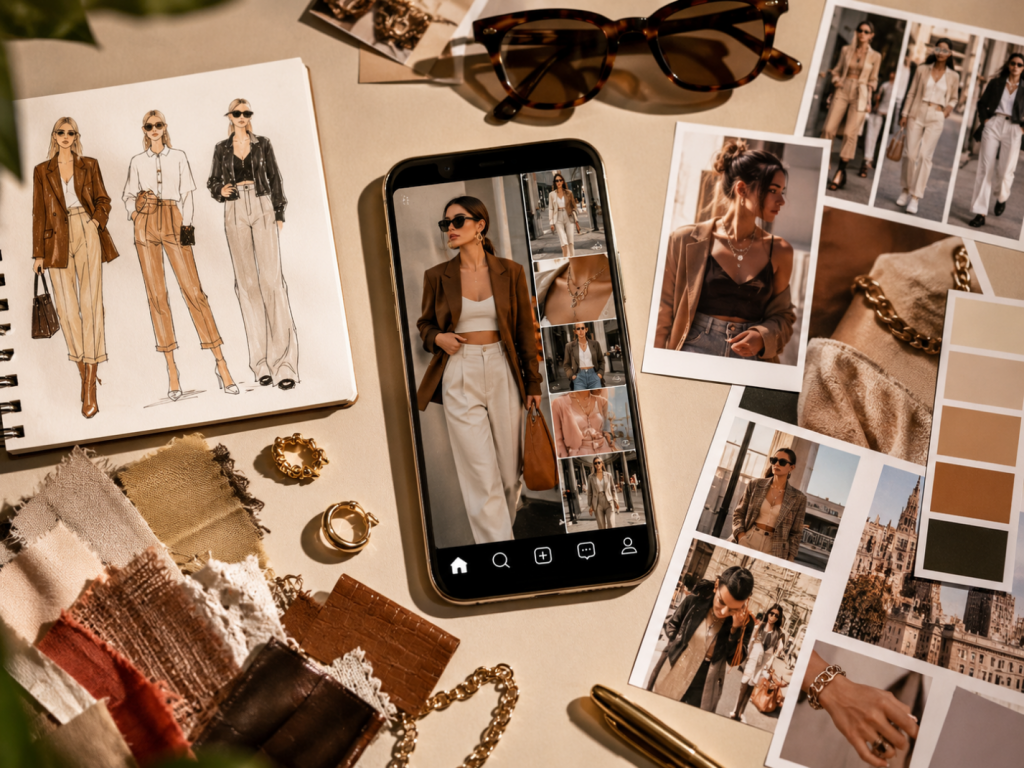
You open TikTok for five minutes. You close it thirty minutes later with a sudden, inexplicable urge to buy a faux fur coat. Or a cream-colored blazer. Or a fleece-lined everything. You weren’t looking for fashion inspiration. You weren’t even thinking about your wardrobe. But now you’re googling “mob wife aesthetic” at 11 p.m. and wondering if you can pull off a red lip.
This isn’t a coincidence. It’s the engine of modern fashion — and TikTok is running it.
How TikTok Influences Fashion Trends Faster Than Seasons
How ‘Aesthetics’ Replaced Seasons as Fashion’s Organizing Unit
Not long ago, fashion operated on a simple calendar: spring/summer collections, fall/winter collections, a handful of runway moments that trickled down to stores over the following months. Trends had time to breathe. They arrived, stayed a while, and left gracefully.
TikTok collapsed that timeline entirely. Instead of seasons, fashion now moves in “aesthetics” — named visual worlds that anyone can adopt overnight. Cottagecore. Clean girl. Balletcore. Office siren. Each one is a complete identity package: specific colors, specific silhouettes, specific energy. A look can move from a niche corner of the platform into mainstream feeds far faster than the old seasonal calendar allowed.
The result is a fashion cycle that’s simultaneously more exciting and more exhausting than anything that came before it. You’re never behind on trends in the traditional sense. You’re just always slightly out of breath trying to keep up.
From Clean Girl to Mob Wife—How TikTok Reverses the Mood
The transition that best illustrates TikTok’s speed happened between late 2023 and early 2024. For most of 2023, the platform was obsessed with the “quiet luxury” and “clean girl” aesthetic: slicked-back hair, neutral tones, understated everything. Think Hailey Bieber. Think The Row. Think about spending a lot of money to look like you didn’t think about what you were wearing.
Then the mood swung in the opposite direction. Enter the mob wife aesthetic: oversized faux-fur coats, animal print, gold jewelry, red lips, and the general vibe of someone who has opinions about you but will not share them. Carmela Soprano became the shorthand, while creators and retailers translated the look into more accessible versions.
The contrast was the point. Beige minimalism gave way to leopard print and visible glamour, showing how quickly TikTok can replace one recognizable mood with its opposite.
Why Certain Looks Go Viral and Others Don’t
The Algorithm Doesn’t Care About Runways — It Cares About Feeling
Runway fashion does not always translate directly into everyday wardrobes. Its role is often to set a mood, create conversation, and influence the designers, buyers, and retailers who interpret it for a broader audience.
TikTok shortens that chain. A look no longer needs validation from a runway or fashion editor before it reaches millions of people. It needs to hold attention long enough for viewers to watch, share, comment, save, or search for more. As a result, the looks that spread fastest are not always the most refined or innovative. They are often the ones that communicate a recognizable feeling immediately: aspiration, confidence, nostalgia, or the sudden realization that you want something you had not considered five minutes earlier.
Aesthetics that name a feeling tend to win. “Clean girl” wasn’t about clean clothes; it was about the feeling of having your life together. “Mob wife” wasn’t about organized crime; it was about unapologetic confidence and drama. When a trend can be summarized in two words and makes you feel seen, it travels fast.
Celebrity Moments That Turned Into TikTok Movements Overnight
Celebrity influence on fashion isn’t new. What TikTok changed is the speed and the direction of that influence. Before social media, celebrities wore things on red carpets, editors photographed them, magazines published the images weeks later, and consumers saw them months after that. The chain was long and slow.
Now, a single paparazzi photo or airport look can quickly become material for TikTok commentary, styling breakdowns, and shopping searches. Dua Lipa in a fur coat or Zendaya in tennis-inspired looks during the Challengers press tour did more than generate traditional fashion coverage. Their outfits were clipped, analyzed, recreated, and folded into broader aesthetic conversations by creators across the platform. A celebrity’s look no longer remains a single red-carpet or street-style moment; TikTok can turn it into tutorials, outfit formulas, and product searches that reach far beyond the original appearance.
The influence also runs both ways. Celebrities can introduce a look to the platform, but stylists and brands also watch which aesthetics are already gaining attention among creators and audiences.
The Cozy Turn — Why Soft, Warm Pieces Keep Winning Online
From ‘Soup Mode’ to ‘Lazy Luxury,’ Comfort Became a Status Signal
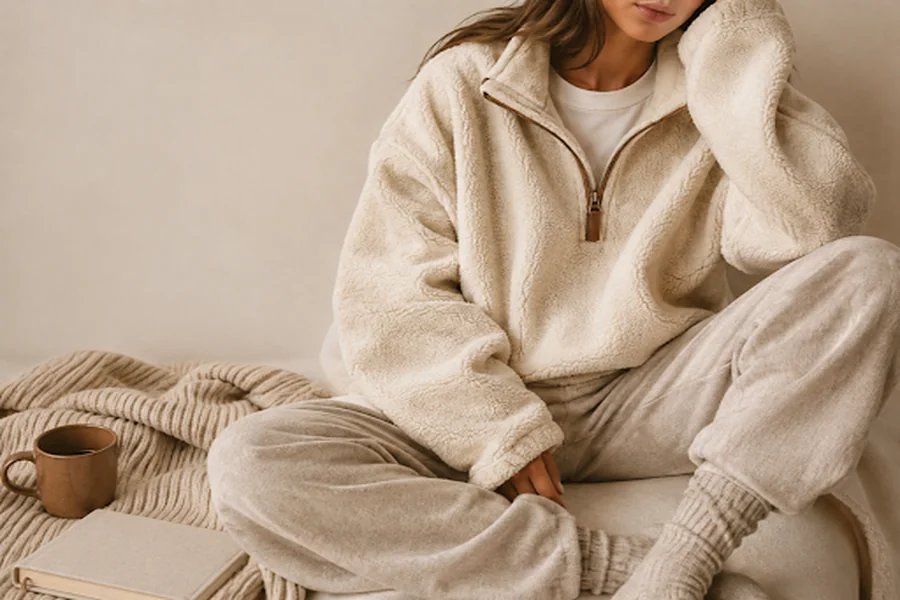
Comfort-led dressing did not arrive as one single TikTok trend. “Soup mode” captured the winter impulse to retreat into oversized layers, soft textures, and clothes suited to slow days indoors. “Lazy luxury” gave a more polished name to a related idea: relaxed silhouettes, muted colors, and tactile pieces that look considered without appearing overstyled.
Both aesthetics worked because they reflected how many people already wanted to dress. Instead of treating comfort as something reserved for home, creators styled roomy knits, brushed layers, and loose trousers as complete outfits for coffee runs, casual dinners, and travel. TikTok did not invent comfortable clothing, but it helped turn ease into a visible style choice rather than a compromise.
Why Texture Reads So Well on a Small Screen
Texture matters on a small screen because viewers register pile, volume, and softness before they know anything about fiber content. That gives soft-knit fleece an obvious visual advantage in outfit videos: it reads as warm and casual immediately, while moving easily between athleisure, outdoor layers, and everyday separates. TikTok did not turn fleece into fashion, but it gives familiar materials new styling contexts whenever comfort-led dressing returns.
How TikTok Influences Fashion Trends—and What Actually Gets Worn
The Gap Between What Goes Viral and What Actually Gets Worn
Here’s the tension at the heart of TikTok fashion: the algorithm rewards attention, not necessarily wearability. A look can earn large numbers of saves and shares because it is visually striking, easy to recognize, or satisfying to watch. That does not always mean it fits the viewer’s climate, routine, budget, or existing wardrobe.
The mob wife aesthetic illustrates the gap. Oversized faux fur, animal print, and heavy gold jewelry created an instantly recognizable look on screen, but the full styling formula was harder to translate into ordinary daily settings. For everyday wear, the aesthetic is easier to borrow in pieces than to reproduce in full: a leopard-print accessory, a red lip, or a dramatic coat can carry the mood without turning an ordinary lunch into a costume.
This isn’t an argument against following trends — it’s an argument for following them with some self-awareness. The question worth asking before the algorithm convinces you otherwise isn’t “is this trending?” but “is this actually me?”
Buying With the Trend vs Buying What Works for You
The brands and creators who are building lasting style influence on TikTok — as opposed to chasing each micro-trend — tend to share one quality: they know what they’re about and they stick to it. The cozy aesthetic works for so many people because soft, comfortable, well-made clothing is genuinely good clothing, not because TikTok said so this week.
If anything, the TikTok fashion cycle is a useful reminder that the fundamentals haven’t changed. Well-made pieces in fabrics you love wearing — whether that’s buying quality knits, sourcing fabric by the yard for your own projects, or simply investing in fewer but better things — will outlast every aesthetic the algorithm discovers next month. The trends will keep rotating. Your best pieces won’t.
TikTok will keep telling you what to wear. It’ll be persuasive, it’ll be fast, and occasionally it’ll be genuinely right. The trick is knowing which occasions those are — and having the wardrobe fundamentals in place so that when the next aesthetic lands on your For You page, you’re shopping to complement what you already love, not to replace it entirely.
The faux fur coat, though. If it makes you feel like Carmela Soprano, that one might be worth it.

