
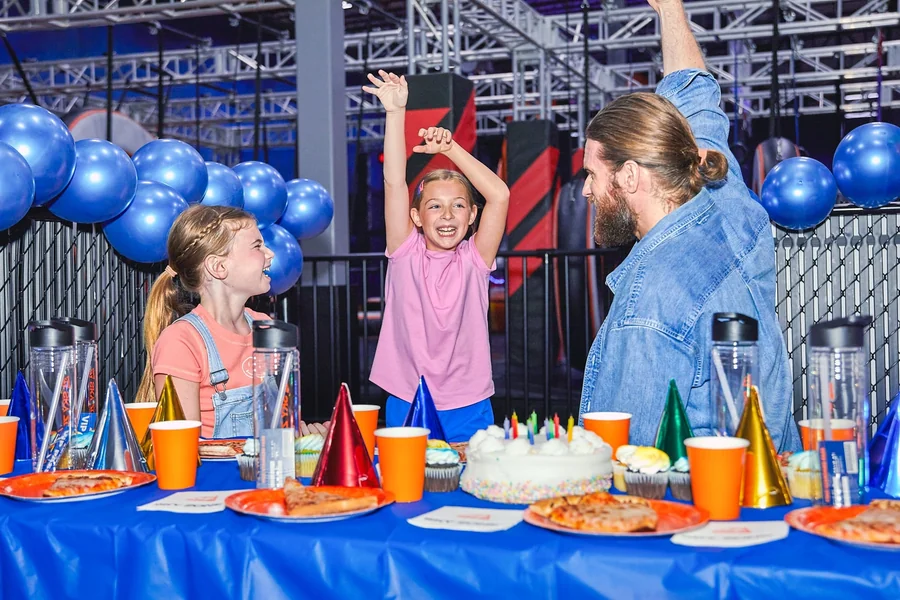
A birthday party can have the best-looking cake, the most photogenic décor, and a venue with serious “wow” factor—and still feel oddly flat. You’ve probably been to one like that: everything is technically “nice,” yet people hover near the edges, conversations stay polite, and the night ends with a quiet trickle of early exits.
What separates a party that’s merely well-organised from one that people rave about for weeks is energy. Not volume. Not chaos. Not forced fun. Energy is the invisible current that pulls guests into the moment, makes a timeline feel effortless, and turns a room of individuals into a shared experience.
So how do you design for energy—especially when birthdays bring together mixed ages, different social circles, and wildly varied expectations? Let’s break it down.
Energy Is the Product You’re Really Hosting
When people say, “That party was amazing,” they’re rarely complimenting your logistics. They’re describing a feeling: warmth, momentum, connection, anticipation. In event terms, energy is the combined impact of music, pacing, lighting, crowd dynamics, and small “micro-moments” that keep people engaged.
Think of energy like a thermostat rather than an on/off switch. Great hosts don’t just crank it to maximum; they adjust it as the room evolves. A 30th birthday in a cocktail bar needs different energy from a 60th in a private dining room or a kid’s party where parents are half socialising, half supervising.
The good news is that energy can be planned. Not scripted—but shaped.
The biggest misconception: “Energy = loud music”
High energy doesn’t always mean higher decibels. Some of the most electric moments at a birthday happen in quieter beats: a well-timed toast, a surprise guest, a nostalgic track that unites the whole room. Loud can be fun; loud without intention can also fragment the room, making conversation and connection harder.
The Three Drivers of Party Energy
Energy is most predictable when you focus on three controllable levers: flow, cues, and comfort.
Flow: momentum over schedule
Most parties have a rough plan—arrivals, food, cake, dancing. The mistake is treating that plan like a checklist. Energy rises when transitions feel natural, not abrupt.
A few simple principles help:
- Don’t stack all the “formal” moments back-to-back (toast + cake + speeches). Spread them out to keep the emotional rhythm varied.
- Create a clear shift after food. That’s the point when attention often dips, so you need a deliberate lift—music change, lighting change, or a group moment.
- Let the first hour breathe. Guests need time to land, find familiar faces, and settle in before you ask them to “perform” socially.
Cues: guests follow signals, not instructions
Guests are constantly scanning the room for cues: Is this a mingle party? Are we dancing? Are we sitting? If cues are unclear, people default to caution. That’s when you get the classic “everyone stands near the bar” pattern.
Cues can be subtle:
- Lighting that shifts warmer and slightly dimmer signals “evening mode.”
- Music that gently increases in tempo suggests “we’re moving into the fun part.”
- A host who relocates to the centre of the room (instead of staying anchored at a table) signals approachability and participation.
If you’re relying on announcements—“Okay everyone, let’s dance!”—you’ve probably missed earlier cueing opportunities.
Comfort: the foundation that makes energy possible
Energy collapses when people are uncomfortable. Too hot, nowhere to sit, long queues for drinks, awkward acoustics—these things drain the room faster than any playlist can fix.
Comfort isn’t glamorous, but it’s powerful. Make sure there’s a mix of seating and standing space, an easy route to the bar or refreshments, and enough room for people to move without feeling on display.
Music as an Energy Engine (Not Background Noise)
Music is the most direct way to influence collective mood, but it works best when it’s treated as an evolving storyline rather than a static genre choice. Your guests don’t just want “good songs.” They want timing that makes sense.
A practical way to think about it is in three arcs:
1) Arrival: familiarity and warmth
Start with tracks that are recognisable but not demanding. People are greeting, ordering drinks, and reintroducing themselves. The goal is atmosphere, not peak excitement.
2) Lift: shared attention
Once most guests have arrived, you can build energy with more rhythmic, upbeat selections. This is also when interactive moments land best—birthday person entrance, toast, or a short surprise.
If you’re not sure how to structure that musical progression—or you simply want someone who can read a mixed crowd in real time—it’s worth looking at experienced providers like DJs specialising in birthday celebrations, because pacing a room is a different skill than just playing popular tracks.
3) Peak: controlled intensity
A great peak doesn’t mean nonstop bangers for two hours. It means waves—high points followed by brief resets—so people can grab a drink, laugh, and come back in. That’s how you avoid the dancefloor emptying all at once.
Reading the Room: The Skill Most Hosts Underestimate
Energy management is really crowd management, and crowds are honest. They’ll tell you what’s working through their behaviour:
- Are people drifting toward the music or away from it?
- Are conversations getting louder (a sign the music may be too loud or too monotonous)?
- Do guests keep checking their phones (often a sign of low engagement or unclear “what happens next”)?
The best parties respond to those signals quickly. Sometimes that means changing the music. Sometimes it means changing the layout—opening up space, moving a table, adjusting lighting. Sometimes it means giving people a moment that reconnects them: a quick toast, a group photo, a birthday person moment.
Here’s the one (small) checklist I recommend keeping in mind—because it covers most energy problems before they happen:
- One clear focal point (where attention goes when something “happens”)
- One easy social zone (where conversation is comfortable)
- One optional high-energy zone (where dancing or games can take off)
That’s it. You don’t need a complex production. You need zones that support different comfort levels.
Designing Micro-Moments That Multiply Energy
A party’s energy isn’t created by one big moment; it’s built by many small ones. Micro-moments work because they reduce social friction. They give guests a shared reference point—something to talk about, laugh about, react to.
Examples that reliably lift energy without feeling cheesy:
- A short “memory trigger” song early on (something tied to the birthday person’s era or taste).
- A surprise cameo (a friend, a video message, a quick montage) kept under three minutes.
- A simple ritual—everyone signs something, records a short message, or adds to a playlist request board.
The rule: keep it moving. Long speeches and complicated activities stall momentum unless your crowd is specifically there for that.
The Takeaway: Energy Is an Experience You Can Plan
If you’re organising a birthday, don’t start with decorations. Start with the feeling you want in the room at each stage: welcome, connection, lift, celebration, peak, and a satisfying wind-down. Then make choices—music, lighting, layout, timing—that support that emotional journey.
Because when energy is right, everything else gets easier. People mingle without prompting. The dancefloor fills naturally. The birthday person feels genuinely celebrated. And your guests leave with the best kind of compliment: “That was such a good night—what was it about that party?”

